
Why cast iron pipes need replacement: a homeowner’s guide

If your San Diego home was built before 1970, there’s a real chance the pipes running beneath your floors are cast iron and quietly approaching the end of their service life. Understanding why cast iron pipes need replacement isn’t just a plumbing technicality. It’s a financial and safety issue that affects your property value, your family’s health, and your peace of mind. This guide walks you through the lifespan realities, the warning signs, the hidden costs, and the replacement options available to you right now.
Key Takeaways
| Point | Details |
|---|---|
| Typical lifespan limit | Cast iron pipes usually last 50-75 years, often reaching end-of-life in San Diego homes built before 1975. |
| Hidden damage risk | Leaks often go unnoticed behind walls, causing mold and foundation damage before visible signs appear. |
| Cascading costs | Ignoring pipe replacement leads to expensive repairs beyond plumbing, including structural and health-related issues. |
| Replacement methods vary | Trenchless and traditional replacement suit different pipe conditions, with trenchless being less disruptive. |
| Proactive replacement benefits | Replacing aging cast iron pipes prevents costly damage, reduces stress, and improves home safety and value. |
Understanding the lifespan and deterioration of cast iron pipes
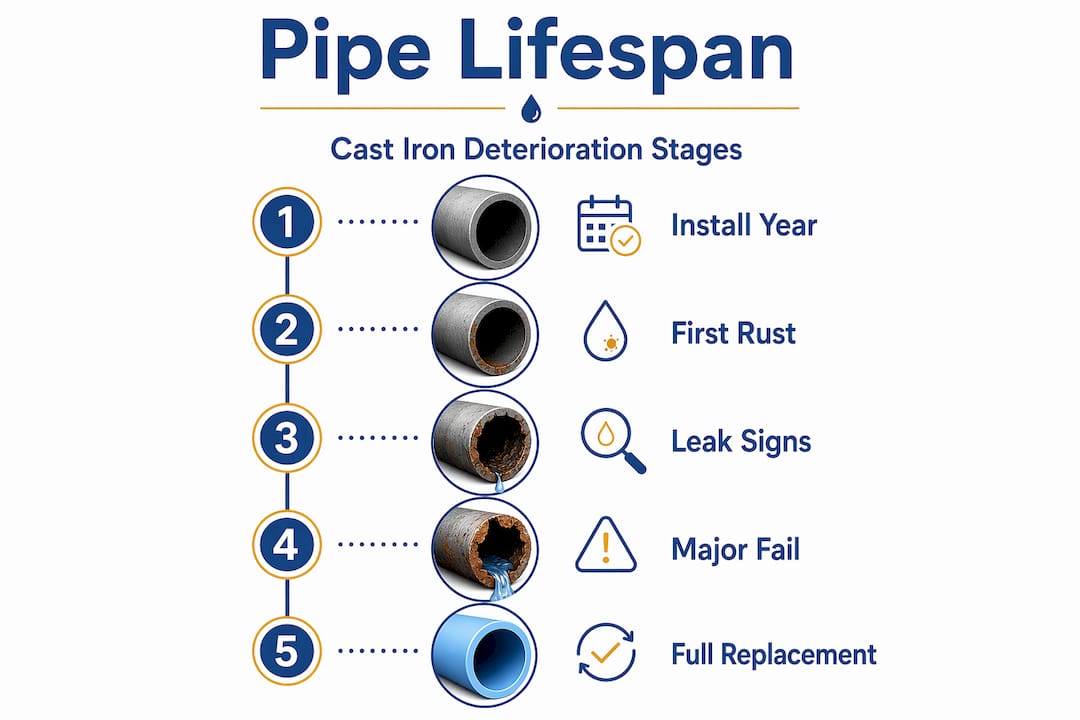
Cast iron pipes have a reputation for durability, and it’s not entirely undeserved. Cast iron pipe longevity typically falls in the 50 to 75 year range, with rare cases reaching close to 100 years under ideal conditions. The problem is that “ideal conditions” almost never describe a real San Diego property.
Here’s what actually shortens cast iron pipe life in San Diego:
- Soil conditions. San Diego’s varied terrain includes clay-heavy and moisture-retaining soils that accelerate external corrosion on buried pipes.
- Water chemistry. Hard water and chlorine in the local water supply wear down pipe interiors over time, narrowing the flow channel through mineral buildup.
- Chemical drain cleaners. Frequent use of store-bought drain cleaners eats away at the iron from the inside, speeding up deterioration significantly.
- Grease and organic waste. Grease accumulation creates a sticky surface inside pipes where corrosion takes hold faster.
- Age alone. Pipes installed before 1975 are now at or past the 50-year mark. Even without any of the above factors, age alone puts them in the replacement window.
You can learn more about how long sewer lines last and what affects their service life on our resource page. The key takeaway here: most cast iron pipes in older San Diego homes aren’t aging gracefully. They’re failing on a timeline that’s already started.
Common signs your cast iron pipes need immediate replacement
Recognizing the warning signs is crucial to prevent further home damage from cast iron pipe failure. The tricky part is that many of the most serious signs of pipe deterioration are invisible until significant damage has already occurred.
Watch for these red flags:
- Slow drains throughout the house. When multiple fixtures drain slowly at the same time, it points to a main line issue, not a local clog.
- Frequent and recurring clogs. One clog is a nuisance. Repeated clogs in the same location suggest internal corrosion narrowing the pipe.
- Gurgling sounds from drains or toilets. This sound means air is being trapped by a partial blockage or a compromised pipe.
- Sewage odors indoors. Cracks in cast iron pipes allow sewer gases to escape into your living space. This is both unpleasant and potentially hazardous.
- Discolored water. Rust-colored or brown water coming from fixtures is a direct sign of internal corrosion.
- Water stains and musty odors. These often appear on walls, ceilings, or floors long after a hidden leak has already caused damage.
- Foundation cracks near plumbing. Underground leaks erode the soil beneath your slab, and that movement shows up as cracks in your foundation.
“Leaks often remain hidden behind walls for months before visible signs like odors or water stains appear, while ongoing moisture causes mold and structural damage.”
Pro Tip: Don’t wait for visible signs before acting. A professional camera inspection runs a small camera through your pipes and shows exactly what’s happening inside, before it becomes an emergency. You can also review how to seal a leaking pipe as a temporary measure, but understand that sealing is not a substitute for replacement on aging cast iron.
The hidden costs of failing cast iron pipes beyond plumbing repairs
Understanding these hidden expenses underscores why timely replacement is a smart investment. Most homeowners focus on the plumbing repair bill. That’s actually the smaller number.
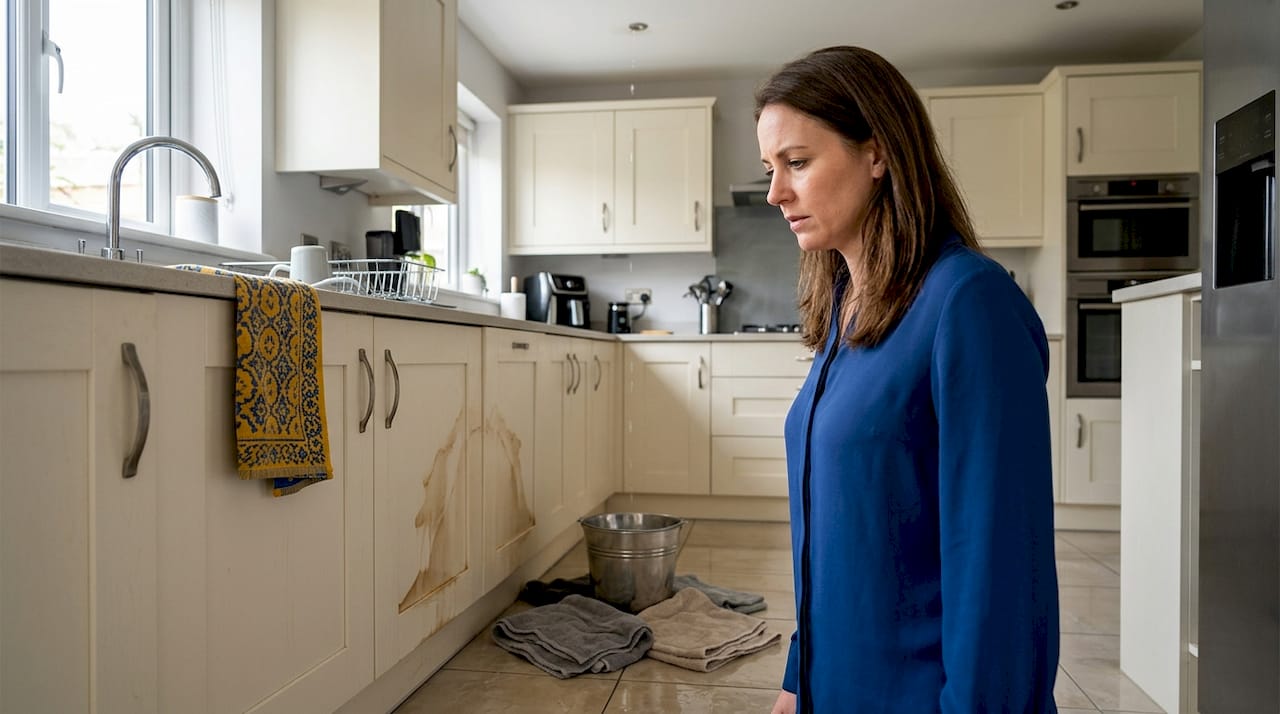
Persistent leaks from cast iron pipes cause cascading property damage like mold growth and foundation cracking, leading to repair costs far exceeding the original plumbing work. Here’s a breakdown of what you’re actually risking:
- Mold remediation. Moisture from a hidden leak creates mold within 24 to 48 hours. Professional mold removal in San Diego runs anywhere from $1,500 to $15,000 depending on the extent of contamination.
- Foundation repair. Soil erosion from underground leaks can cause your foundation to settle or crack. Foundation repair in Southern California regularly exceeds $10,000.
- Increased insurance costs. Many insurers treat homes with aging cast iron plumbing as higher risk, raising premiums or refusing certain claims outright.
- Property value decline. A home inspection that flags failing pipes will lower your sale price or kill a deal entirely.
- Health hazards. Sewer gas contains hydrogen sulfide and methane. Prolonged exposure causes respiratory irritation, headaches, and in extreme cases, explosion risk.
City officials have also raised alarms about this issue at a municipal level. Aging cast iron water pipes are described as far past their design life, with officials noting that replacing older lines is a key part of reducing future breaks and maintenance costs.
If you ever face a burst pipe situation, knowing what to do when water pipes burst can limit immediate damage while you arrange professional help.
Replacement methods: trenchless versus traditional cast iron pipe replacement
With replacement methods in mind, next we’ll discuss how to decide the best approach for your property. Not all replacements look the same, and the right method depends on your pipe’s current condition.
| Factor | Trenchless replacement | Traditional replacement |
|---|---|---|
| Average cost | Lower overall | Higher due to excavation |
| Project duration | 1 to 2 days typically | Several days to a week |
| Landscaping impact | Minimal | Significant disruption |
| Disruption level | Low | High |
| Best for | Intact or partially damaged pipes | Collapsed or severely misaligned pipes |
| Pipe rerouting | Not possible | Possible |
Trenchless methods cost less and cause less disruption but require pipes that are largely intact. Traditional methods suit collapsed pipes and allow rerouting but are more invasive and costly.
Key points to understand about each approach:
- Trenchless pipe lining (also called CIPP, or cured-in-place pipe lining) inserts a resin-coated liner into the existing pipe, which hardens to form a new pipe within the old one.
- Pipe bursting is another trenchless option that fractures the old pipe outward while simultaneously pulling a new pipe into place.
- Traditional open-cut replacement is necessary when pipes have collapsed, shifted significantly, or need to be rerouted entirely.
Pro Tip: Always schedule a camera inspection before committing to a replacement method. The inspection tells you whether your pipes are candidates for trenchless work or whether traditional excavation is the only viable path. Learn more about trenchless sewer repair options and how they compare for San Diego properties.
How to decide when to repair, spot-fix, or fully replace cast iron pipes
Knowing how to choose between repair and replacement equips you to take the next step to protect your home. The answer isn’t always full replacement, but it’s more often than most homeowners expect.
Spot repairs make sense only for isolated damage in pipes under 40 years old. Full replacement is recommended for pipes 50 years or older or when a camera inspection reveals widespread corrosion.
Here’s a simple decision process you can follow:
- Schedule a camera inspection. This is non-negotiable. You cannot make a sound decision without knowing what’s actually inside your pipes.
- Review the inspection report. Look for the extent of corrosion, any cracks or root intrusions, and whether damage is isolated or spread throughout the system.
- Add up your repair costs to date. If you’ve already spent on repeated drain cleaning, spot fixes, or emergency calls, those costs count against the repair option.
- Factor in your ownership plans. If you plan to stay in the home long term, replacement pays for itself in avoided repairs and increased property value. If you’re selling soon, failing pipes will surface in the inspection anyway.
- Consult a licensed plumbing professional. A qualified plumber can translate the camera footage into a clear recommendation with cost estimates for both paths.
Spot repairs are appropriate when:
- Damage is confined to one section
- The rest of the pipe shows minimal corrosion
- The pipe is less than 40 years old
- Budget constraints make full replacement impossible right now
Full replacement is the right call when:
- Pipes are 50 years or older
- Multiple sections show corrosion or cracking
- You’ve had recurring clogs or leaks in different locations
- A camera inspection reveals widespread deterioration
Review our guide on worn-out drain and sewer pipes for more detail on what different levels of pipe wear actually look like and what they mean for your next steps.
Why replacing cast iron pipes is often the most cost-effective choice for San Diego properties
Here’s a perspective we’ve developed after more than two decades of working on San Diego plumbing systems: most homeowners who delay full replacement end up spending more money, not less.
The pattern is consistent. A homeowner calls for a drain cleaning. Then a spot repair six months later. Then another drain cleaning. Then a camera inspection that reveals what was always there: widespread internal corrosion that no amount of spot work was ever going to fix. By that point, they’ve spent real money on band-aid solutions and still need the full replacement they were trying to avoid.
Property damage from pipe leaks often dwarfs repair costs, making full replacement the rational choice to avoid repeated disruption and escalating expenses. We’ve seen this play out in homes across San Diego, from older bungalows in North Park to multi-unit properties in Mission Hills.
There’s also a timing opportunity that most people miss. If you’re already planning a bathroom remodel, a kitchen renovation, or any project that opens up walls and floors, that’s the ideal moment to replace your cast iron pipes. The demolition work is already happening. Coordinating pipe replacement at the same time dramatically reduces total labor and restoration costs. Our tips on sealing leaking pipes can help you manage any active leaks in the short term while you plan a larger project.
Pro Tip: Think of pipe replacement as a home improvement, not just a repair. New PVC or ABS piping comes with a 50-plus year lifespan, eliminates corrosion risk, and is a genuine selling point when you list your home.
The reluctance to replace is understandable. It’s a significant project. But the alternative, managing a slow-motion failure with repeated repairs, costs more in money, stress, and risk to your home’s structure and your family’s health.
Trusted cast iron pipe replacement services in San Diego with Almco Plumbing
If your home has aging cast iron pipes, you don’t have to figure this out alone. At Almco Plumbing, we’ve been helping San Diego homeowners and property managers navigate exactly this situation since 2001.
We start with a thorough camera inspection so you know exactly what you’re dealing with before any work begins. From there, we walk you through your options with transparent pricing and no pressure. Whether your property is a candidate for trenchless replacement or requires traditional excavation, we have the experience and equipment to handle it correctly. Our main sewer line replacement guide is a great starting point if you want to understand the full scope of what replacement involves. For a clear picture of costs, visit our page on sewer line replacement pricing.
Almco Plumbing service highlights:
- In-depth camera inspections to assess pipe condition accurately
- Transparent estimates with no hidden fees
- Experienced trenchless technology use including pipe lining and pipe bursting
- Full pipe replacement and remodeling coordination
- Licensed and insured professionals serving all of San Diego
When you’re ready to move forward, our guide on choosing a plumbing contractor for sewer line repair can help you ask the right questions. Call or text us today to schedule your inspection.
Frequently asked questions
How do I know if my cast iron pipes need replacement?
Look for slow drains, sewage odors, water stains, recurring clogs, and foundation cracks near plumbing. A professional camera inspection provides conclusive evidence of what’s happening inside your pipes, confirming whether warning signs of failing cast iron require spot repair or full replacement.
Can cast iron pipes be repaired instead of replaced?
Spot repairs work only for isolated damage on pipes younger than 40 years. Full replacement is recommended for pipes 50 years or older or when a camera inspection reveals widespread corrosion throughout the system.
What are the benefits of trenchless pipe replacement compared to traditional methods?
Trenchless replacement costs less, causes minimal disruption, preserves your landscaping, and typically finishes in one to two days. The trade-off is that trenchless methods need intact pipes, while traditional open-cut replacement is necessary for collapsed or severely misaligned pipes.
What risks do failing cast iron pipes pose to my home and health?
Failing pipes can cause mold growth within 48 hours of a hidden leak, foundation damage from soil erosion, and sewer gas infiltration that poses respiratory and explosion risks. Leaking cast iron pipes set off a chain of property damage that consistently costs far more than the original plumbing replacement would have.
Recommended
- How to Know When Your Drain and Sewer Pipes Are Worn Out – Almco Plumbing
- How to Fix a Broken Sewer Pipe Under Your House: A Step-by-Step Guide – Almco Plumbing
- How to Fix a Cracked Sewer Pipe: Expert Advice from Almco Plumbing – Almco Plumbing
- How to Fix a Cracked Sewer Pipe: Expert Advice from Almco Plumbing – Almco Plumbing