
Repiping 14-unit apartment complex in San Diego
An apartment repiping project in an occupied building is always a tough job, especially when people are living inside. When our Almco Plumbing team showed up to this 14-unit complex in San Diego (it’s actually two separate buildings), they had recurring leaks and even flooding from old underground galvanized and copper pipes failing under the slab. What made this project special was how we solved it: we replaced the whole water system across both buildings without tearing the place apart or making a huge mess, and kept the water off for just one single day.
Dealing with Water Pressure & Complex Layout
So the whole 14-unit complex was hooked up to just a small 3/4-inch main line from the city meter. Upgrading that city line under the sidewalk is crazy expensive, so we had to figure out how to make it work with what we had. To get better water flow, we stepped up the main distribution pipes along the exterior walls from 3/4-inch to 1-inch pipe. Once you go past the meter, bigger pipe gives you a bit more water volume stored up, so when tenants turn on taps at the same time, pressure doesn’t drop to a trickle.
Instead of tearing up floor tile inside people’s apartments, we went with an exterior reroute setup:
- Canceling the bad underground lines: Rather than jackhammering floors trying to chase pinhole leaks, we just cut, capped, and abandoned all the old hot, cold, and return lines underground.
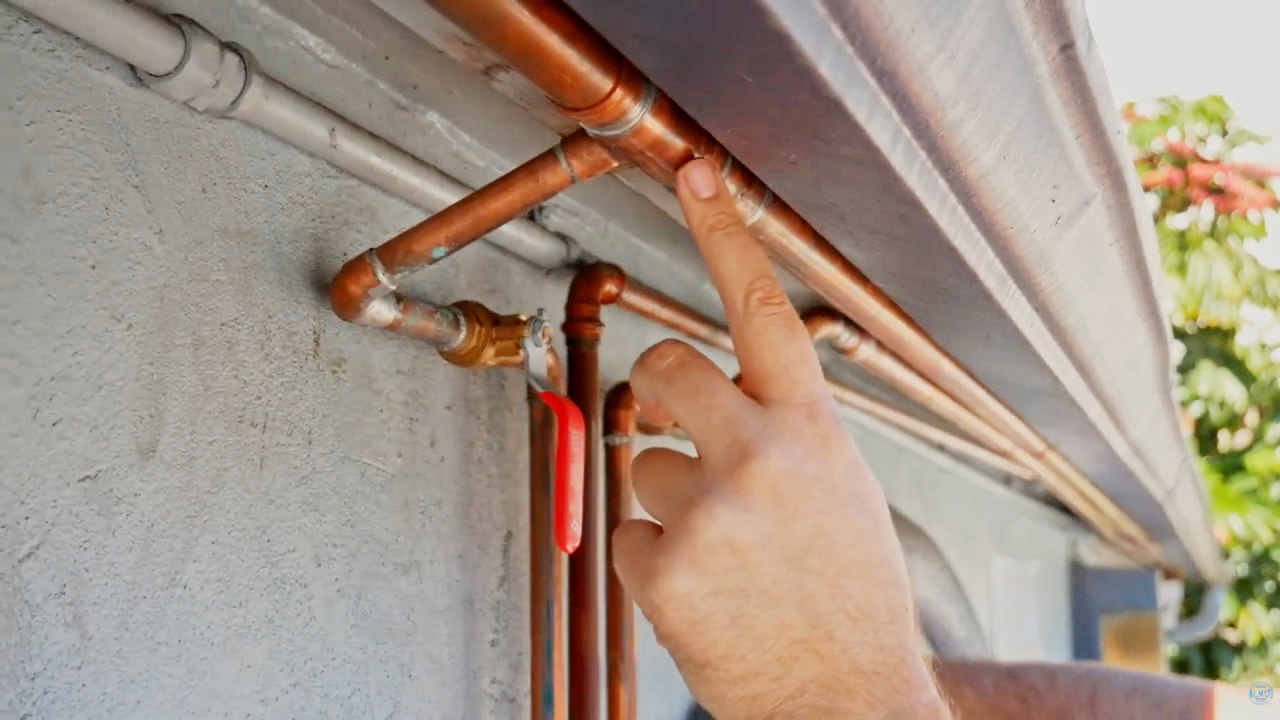
- Hiding the exterior pipes: We ran new lines along back exterior walls where nobody really walks. Used clean 90-degree bends to keep it straight and neat, and insulated all the hot water lines so heat doesn’t bleed off.
- Adding shutoffs for unit groups: Before, if one unit had a leak, you had to turn off water for all 14 units. We added new shutoff manifolds for every 2 to 4 units, so now if there’s ever a problem, only a couple units are affected instead of the whole complex.
- Hooking up recirculation: Tied the new hot water line right back into their existing return loop, so after repiping hot water gets to the top and bottom floors without long waits.
Getting the One-Day Water Cutover Done
When you do an apartment repiping job, keeping tenants happy is half the battle. To keep disruption low, the guys mounted all the exterior brackets, ran the main lines, and drilled the wall holes while the old water system was still turned on and working.
Then came tie-in day. We scheduled one main shutoff day, opened small access holes behind kitchen sinks and showers, cut the old lines, capped them off, and hooked the new risers right into the fixtures. Working in teams across both buildings, we got the water back on that same evening — so tenants only had 1 day without water total.
Extra Job: Chemical Descaling vs Breaking Up Tile
While we were doing this job, we also had to deal with a real stubborn floor drain blockage at a nearby commercial spot. A 2-inch cast iron drain was almost completely choked shut with hard calcium, rust, and scale, making water back up on the floor.
Instead of jumping straight to jackhammering — which would ruin expensive floor tile and cost a fortune — we spent a few hours checking the line with our small inspection cameras. Once we saw what was in there, we used heavy-duty professional descaling chemicals combined with vacuum pressure flushing. The chemical reaction ate right through the hard buildup inside the 2-inch line and opened it back up, saving the owner thousands in tile repair.
FAQ About Apartment Repiping
How long does a multi-family repiping job take?
Running lines on the outside and prepping everything takes a few days, but the actual water shutoff for tie-ins can usually be done in just 1 day if you plan it right and have enough hands on deck.
Why run pipes on the exterior of the building?
It lets you abandon failing underground pipes without breaking concrete inside living rooms or opening up tons of drywall. Saves money, reduces noise, and makes less mess for tenants.
Can you get better water pressure without changing the city meter?
Yeah! Going from 3/4-inch to 1-inch on the building side holds more water volume in the line, so pressure stays much steadier when several people use water at once.
Does running pipes outside look messy?
Not if it’s done right. We tuck lines along building corners, under roof eaves, or along low-visibility walls, and wrap hot lines with clean insulation so it doesn’t look sloppy.
Managing a multi-family or commercial plumbing project?
Check out our full guide on epoxy lining and repiping services to see how we handle tough commercial jobs.
We working on commercial properties according strictly to to keep everything up to standard.
ALMCO Plumbing
Serving San Diego since 2001
(858) 544-6331