
Pipe Repair in the Kitchen Using Spray Epoxy Lining Technology: How to Revive a 70-Year-Old Sewer System?
Old, worn-out pipes are a common cause of drainage issues in the kitchen. Modern trenchless technologies like Spray Epoxy Lining allow for fast, high-quality repairs with minimal disruption during plumbing work. Additionally, trenchless methods significantly reduce the financial costs of pipe renewal. Below is a case study from Almco Plumbing showcasing the restoration of a private home’s sewer system in Del Mar.
Technologies & Services




The Client’s Main Problem & Working Conditions
The specialists from Almco Plumbing were called to repair the sewer system of a private home in Del Mar. The issue was that the kitchen sewer pipe, which had been in service for about 70 years, was broken right near the foundation.
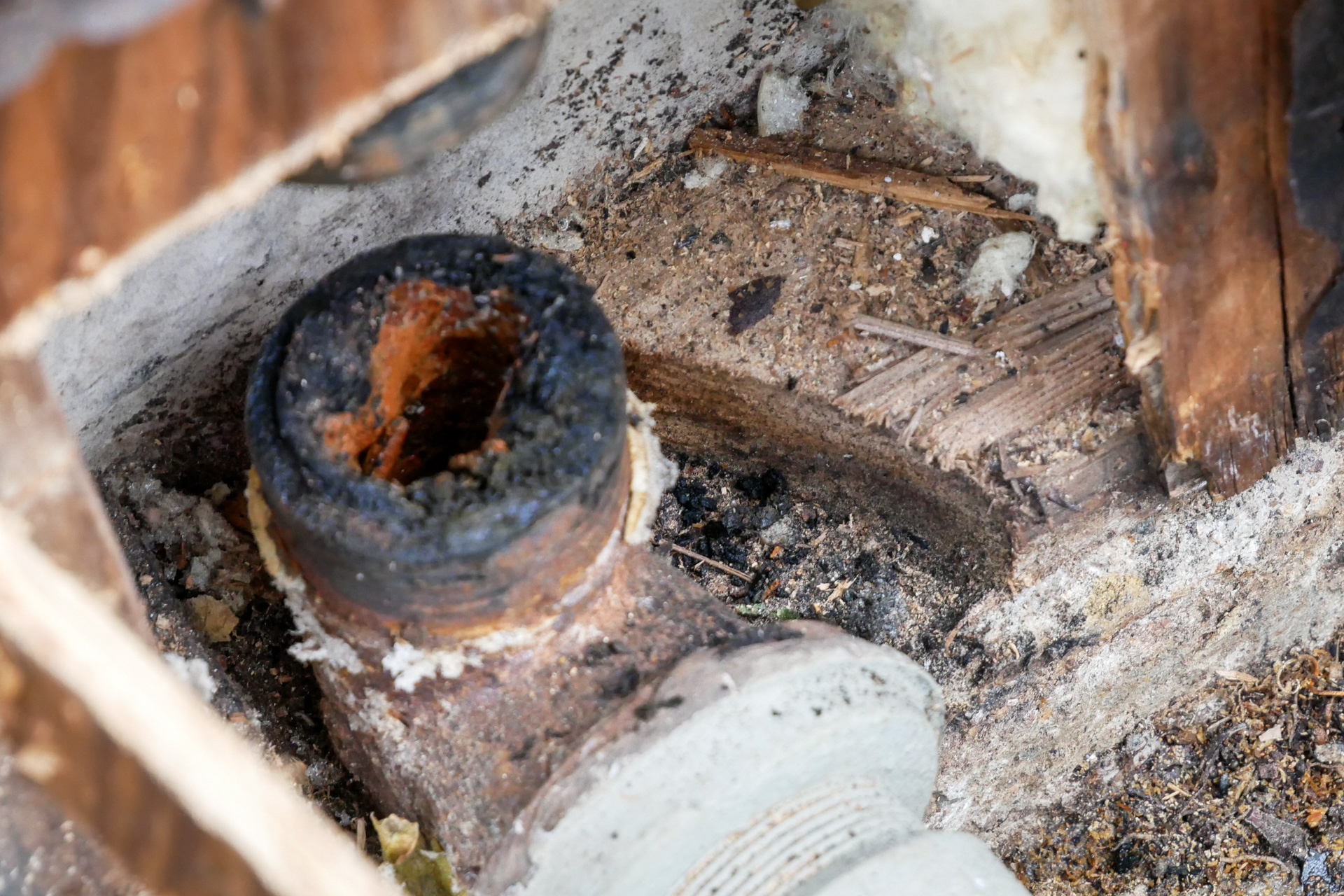
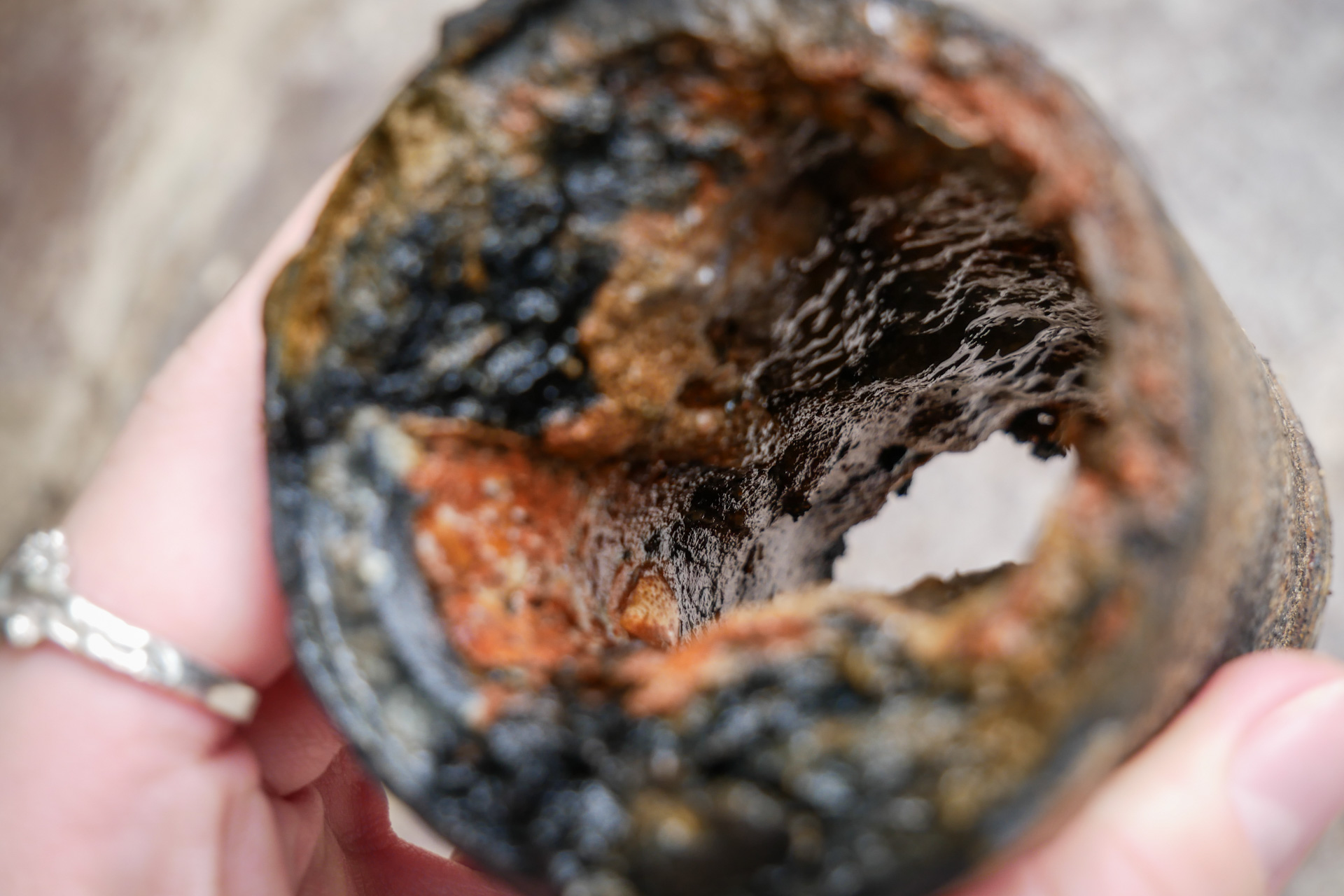
Previous specialists had suggested an invasive repair method that would involve demolishing the foundation and tearing up the ground inside the house. Additionally, the cast-iron pipes in the kitchen were heavily coated with mineral deposits and scale, significantly hindering wastewater drainage.
The homeowner wanted the work to be done without disturbing the landscape or damaging the interior of the house. The only viable option in this case was a trenchless pipe repair using the Spray Epoxy Lining technology.
The Process of Cleaning & Preparing Pipes for Repair by spray epoxy
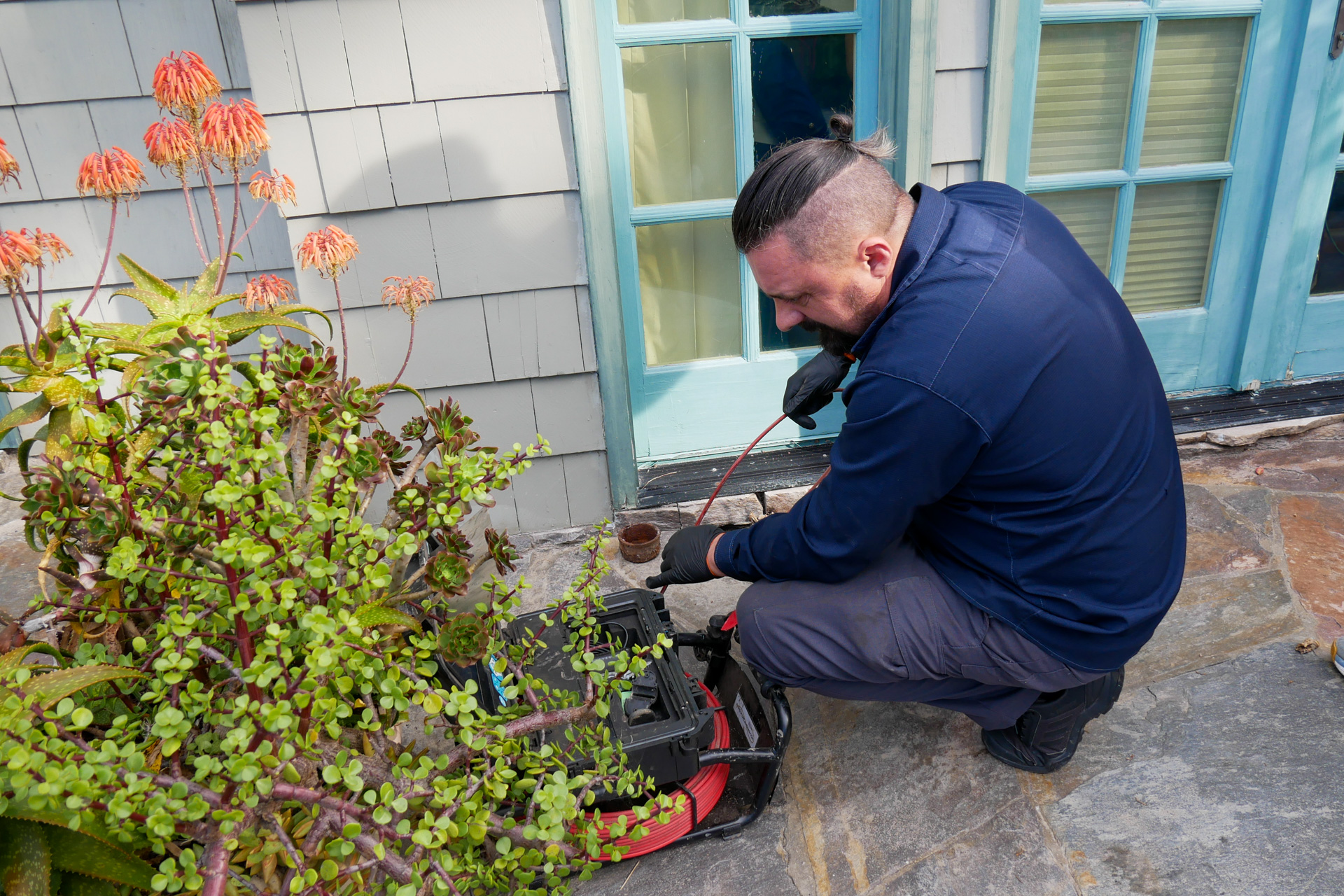
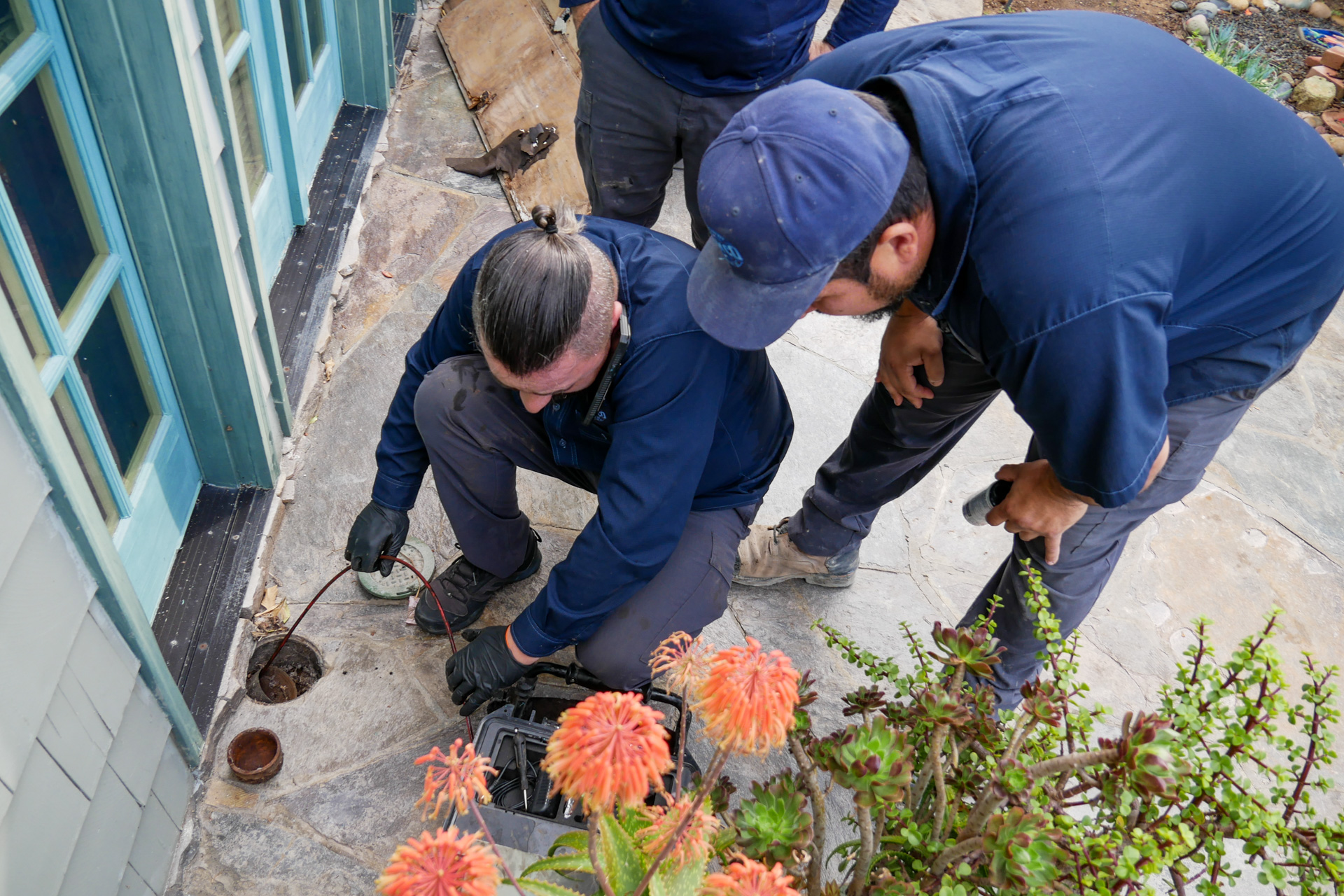
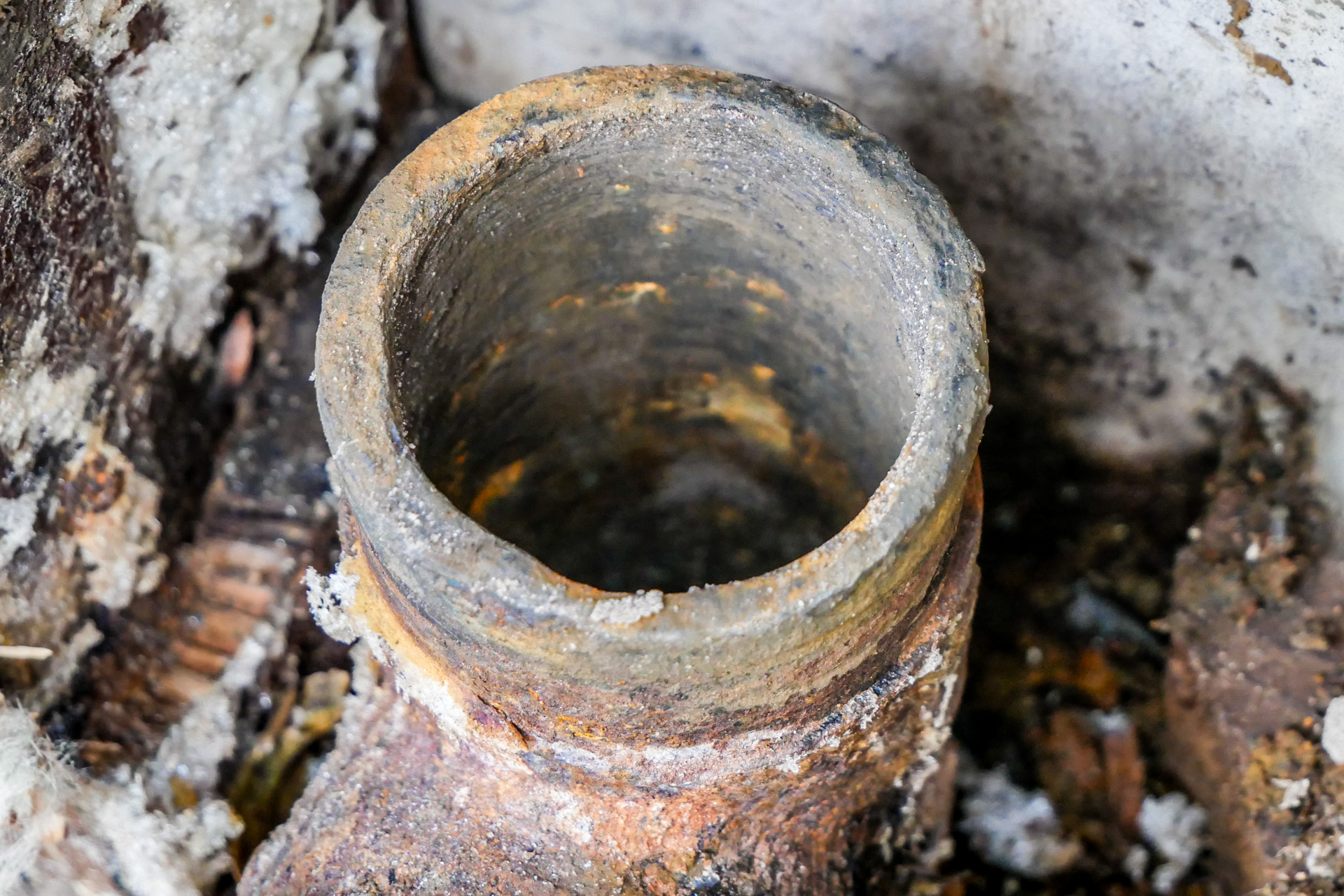
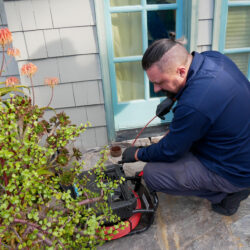
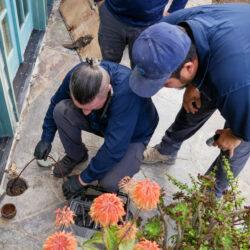
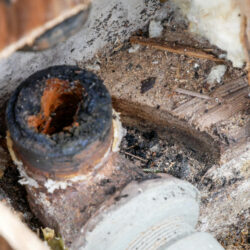
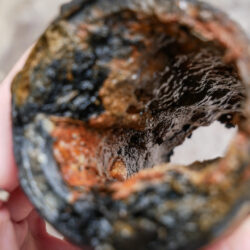
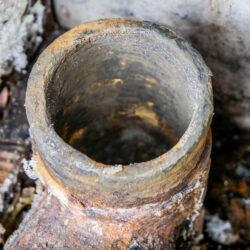
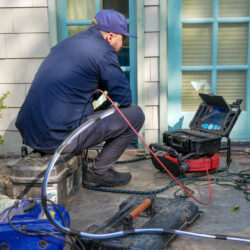
First, using video diagnostic equipment, the Almco Plumbing team assessed the condition of the pipe from the inside to identify blockages, deposits, and damage. The sewer pipeline of this house ran directly through the yard, at the end of the building. The drainage pipes from the kitchen were easily accessible, so no parts of the house needed to be demolished for the repair.
As revealed by the visual inspection, the sewer system was in poor condition: multiple layers of calcite buildup, metal corrosion, and other defects led to constant clogs in the wastewater drainage system.
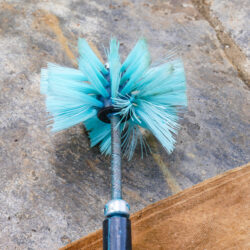
- After completing the video diagnostics and planning the stages of work, the process of cleaning the pipes began using a chain auger with high-strength carbide chains. This effectively cleared the blockages and removed the calcite deposits from the inner walls of the sewer pipes.
- To further smooth the inner surface, the system was flushed with a strong water jet to wash out any remaining debris. High-pressure water equipment with specialized diffusers in the cleaning head was used to supply water at high pressure into the sewer system. As a result, the walls of the pipe became smooth, ensuring optimal adhesion of the epoxy lining.
- At the final stage of cleaning, a high-speed grinding auger was used. This helped remove any potential burrs or chips from the metal surface of the cast-iron pipe, leaving the surface smooth and fully prepared for the application of the restorative epoxy coating.
Restoring the Pipeline Using Spray Epoxy Technology
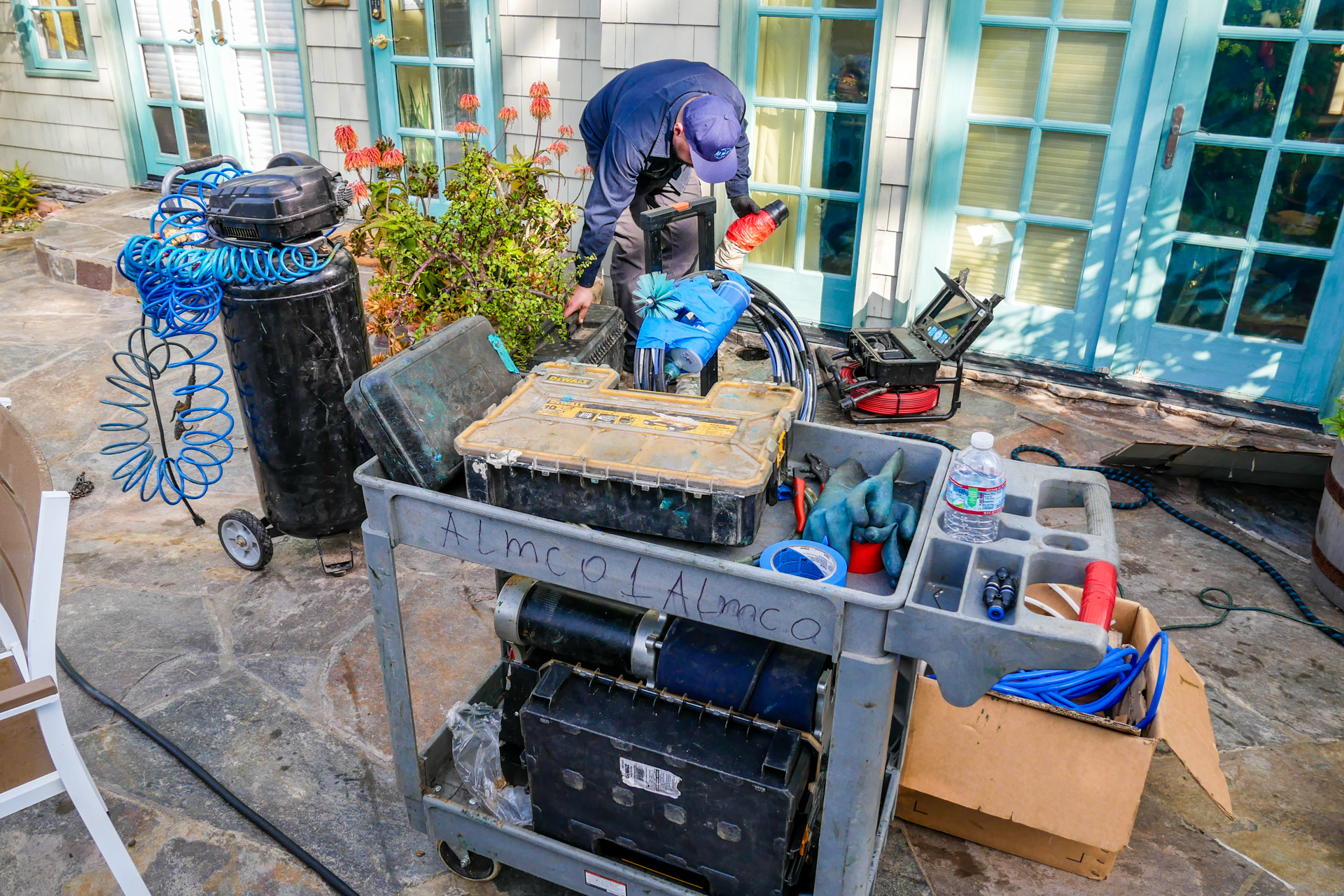
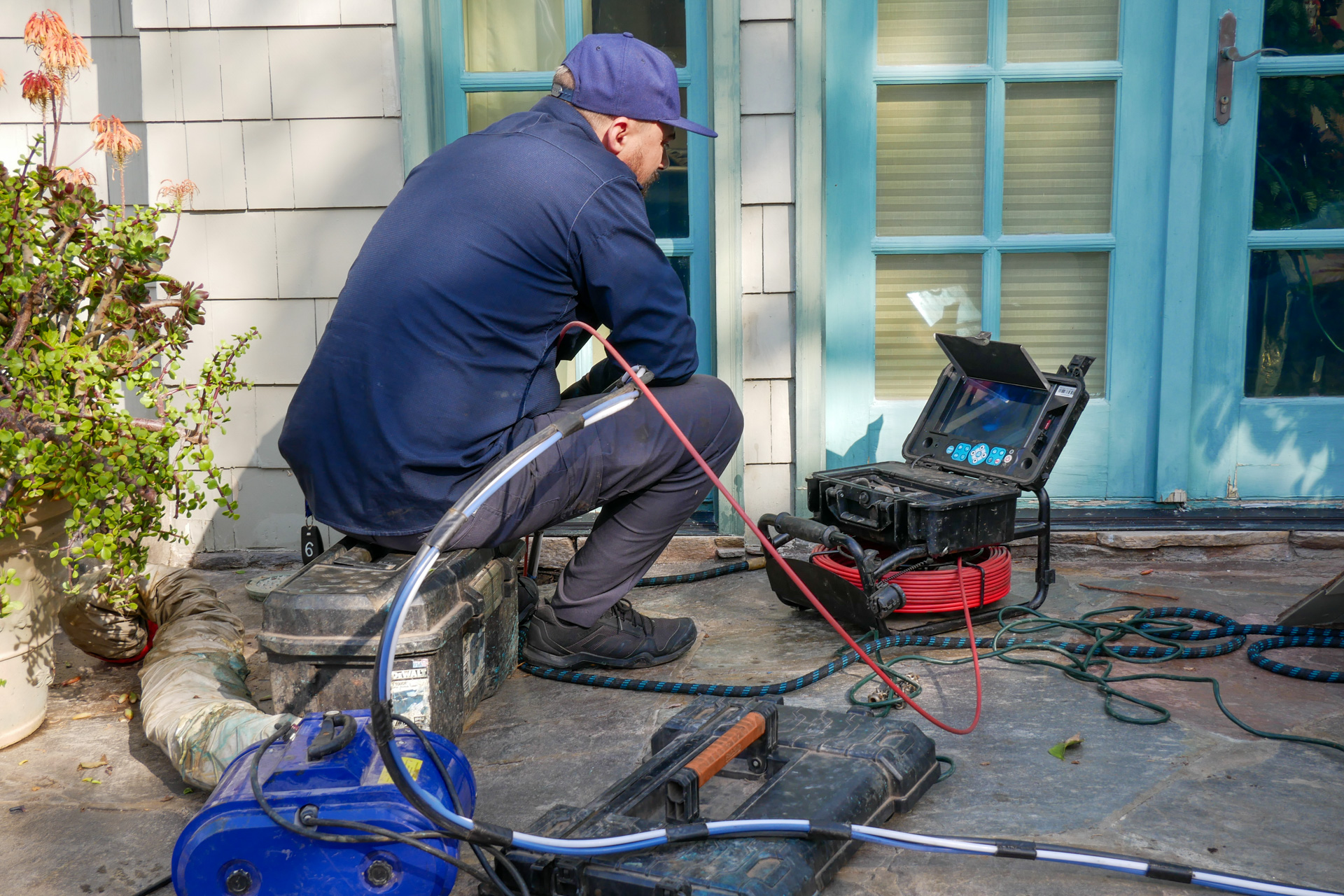

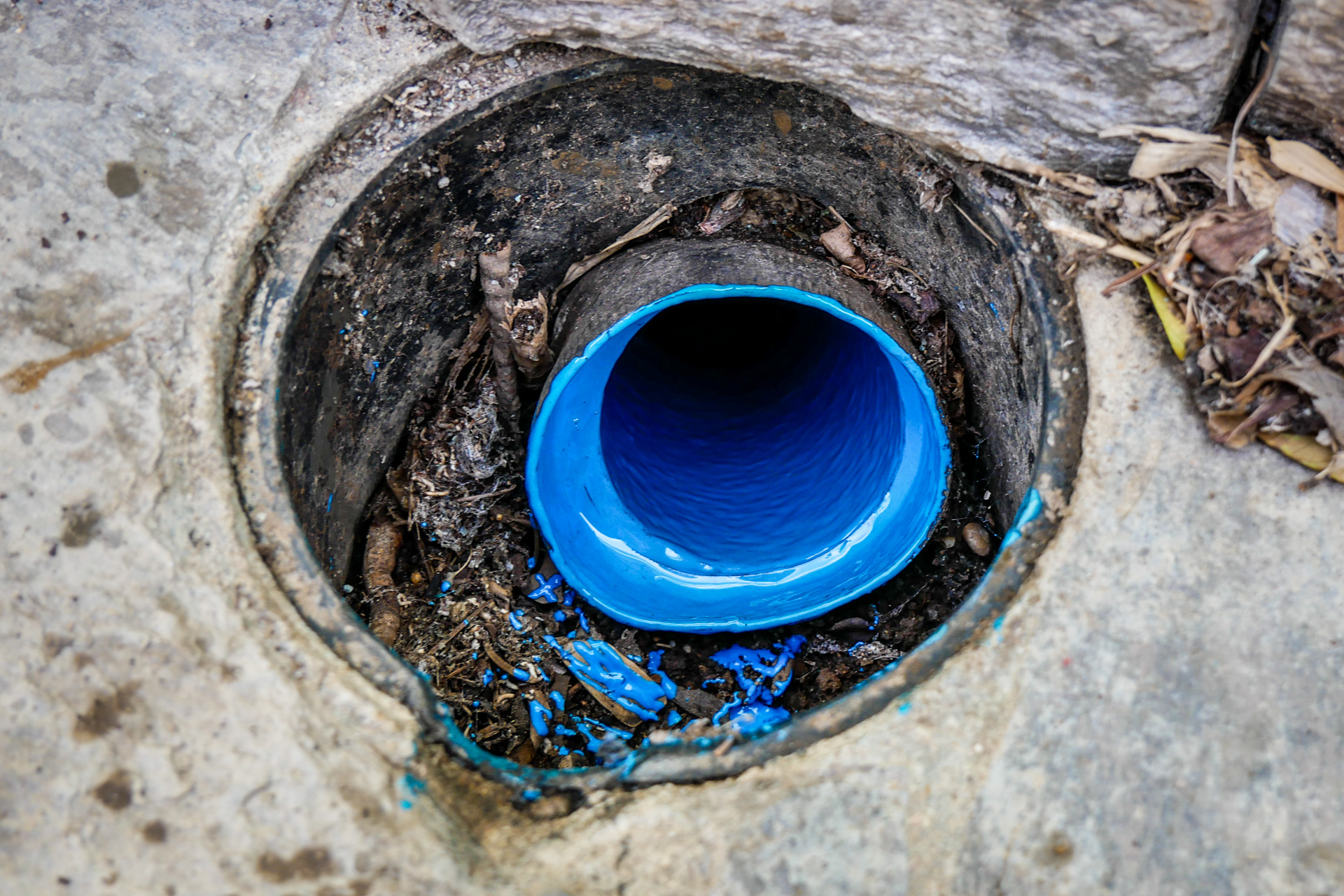
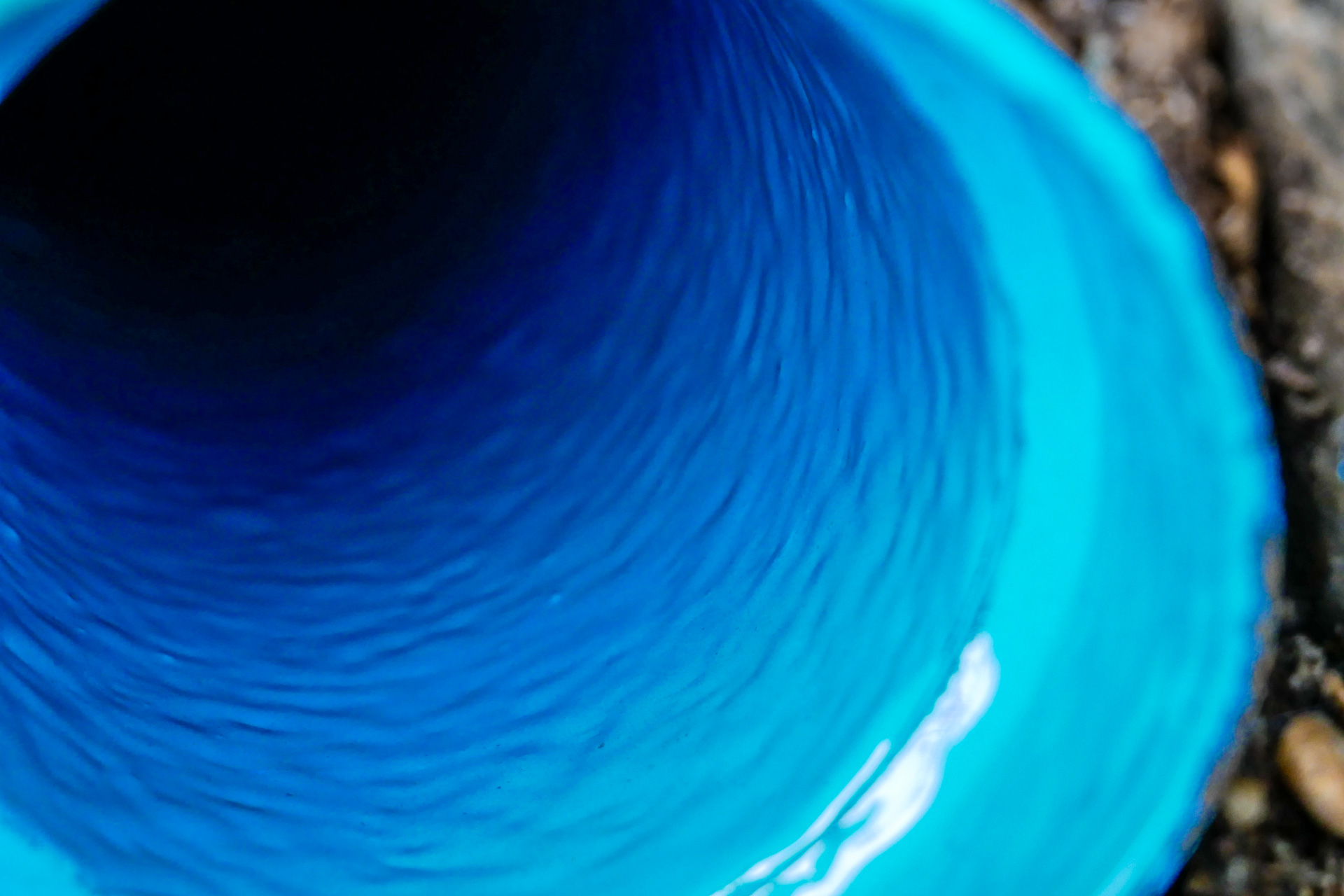

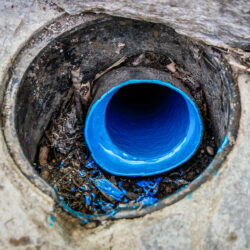

To apply the protective coating to the inner surface of the pipes, the spray epoxy lining method was used, a modern technology for treating sewer pipes with epoxy resin. This process includes several important stages:
-
- After thoroughly cleaning and drying the pipes, special equipment is prepared to apply the epoxy layer. Almco Plumbing specialists use high-quality, bright blue epoxy resin to easily control the application process and quickly correct any defects. The spraying apparatus consists of a flexible rotating shaft and a specialized nozzle that distributes the restorative composition evenly along the interior walls.
- The application of the restorative layer is monitored with video diagnostic equipment, ensuring precision at each stage of the process. After applying three layers of epoxy, they need to cure, which takes approximately 40–45 minutes. Once the drying process is complete, the company engineer conducts a final visual inspection using video equipment to verify the quality of the work. The result was complete structural restoration without structural wall removal.
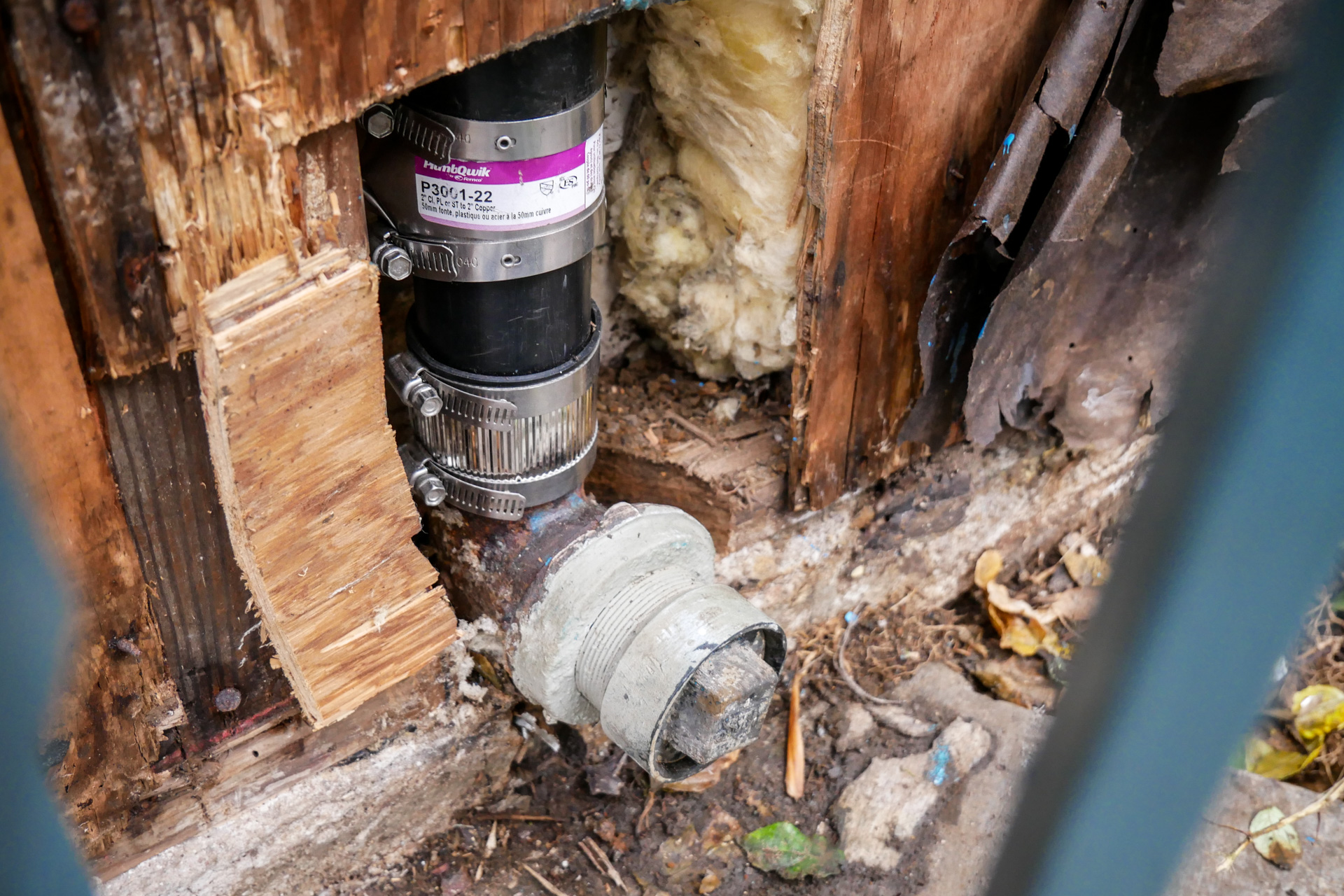
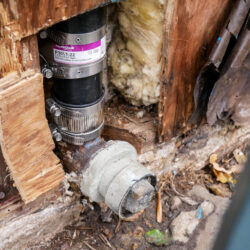
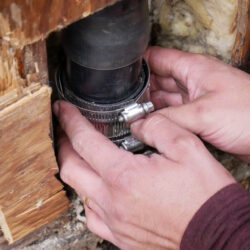
- At the final stage, new connecting components were installed. High-durability rubber seals and heavy-duty detachable clamps were used for the connections, ensuring simple access to the system for future maintenance. After installing the connections, a comprehensive final inspection of the sewer system’s performance was carried out.
Advantages of Using Epoxy Resins for Pipe Repair & Restoration
The use of epoxy resins for the restoration of sewer pipes offers a number of significant advantages:
- Durability: The epoxy coating significantly extends the lifespan of pipes by protecting them from corrosion, mechanical damage, and the buildup of deposits.
- Safety & Environmental Friendliness: Once fully cured, the epoxy resin becomes completely safe and inert. In its hardened state, it does not release toxic substances and poses no threat to health or the environment.
- Non-Invasive: Thanks to the use of specialized equipment, work can be carried out without trench digging, damage to the property, or disruption to other parts of the building.
- Cost-Effectiveness: Restoring pipes using epoxy coating is a far more cost-effective solution than a full pipe replacement.
As a result of this technology, not only is the functionality of the sewer system restored, but also the operational lifespan of the pipes is extended. Clients receive high-quality results with minimal time and financial investment, making this technology optimal for modern commercial and residential sewer maintenance.