
How 110-Year-Old Cast Iron Pipe Outlast an 60-Year-Old Replacement in the Same San Diego Home?
Should You Replace Your Old Cast Iron Pipes?
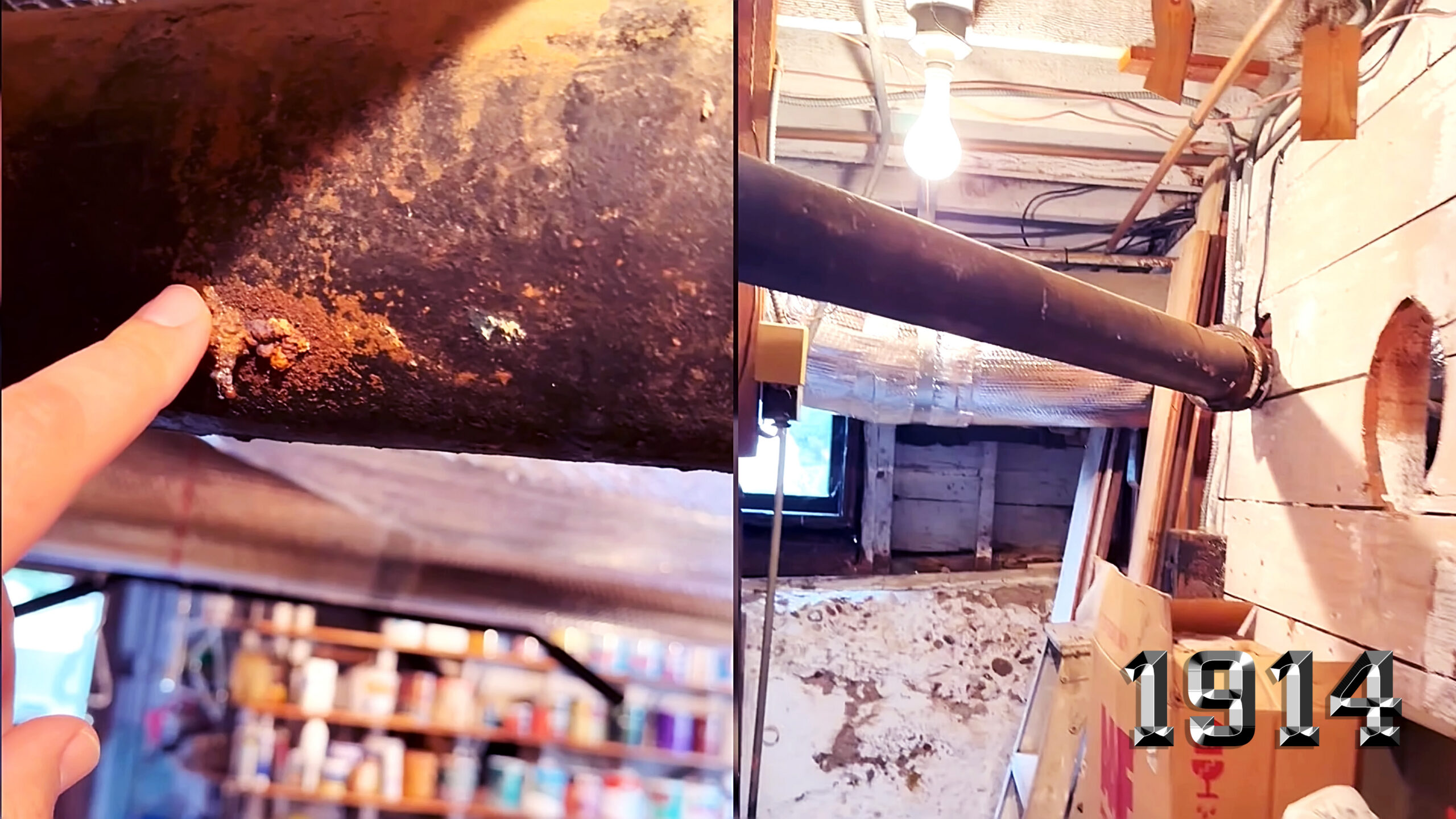
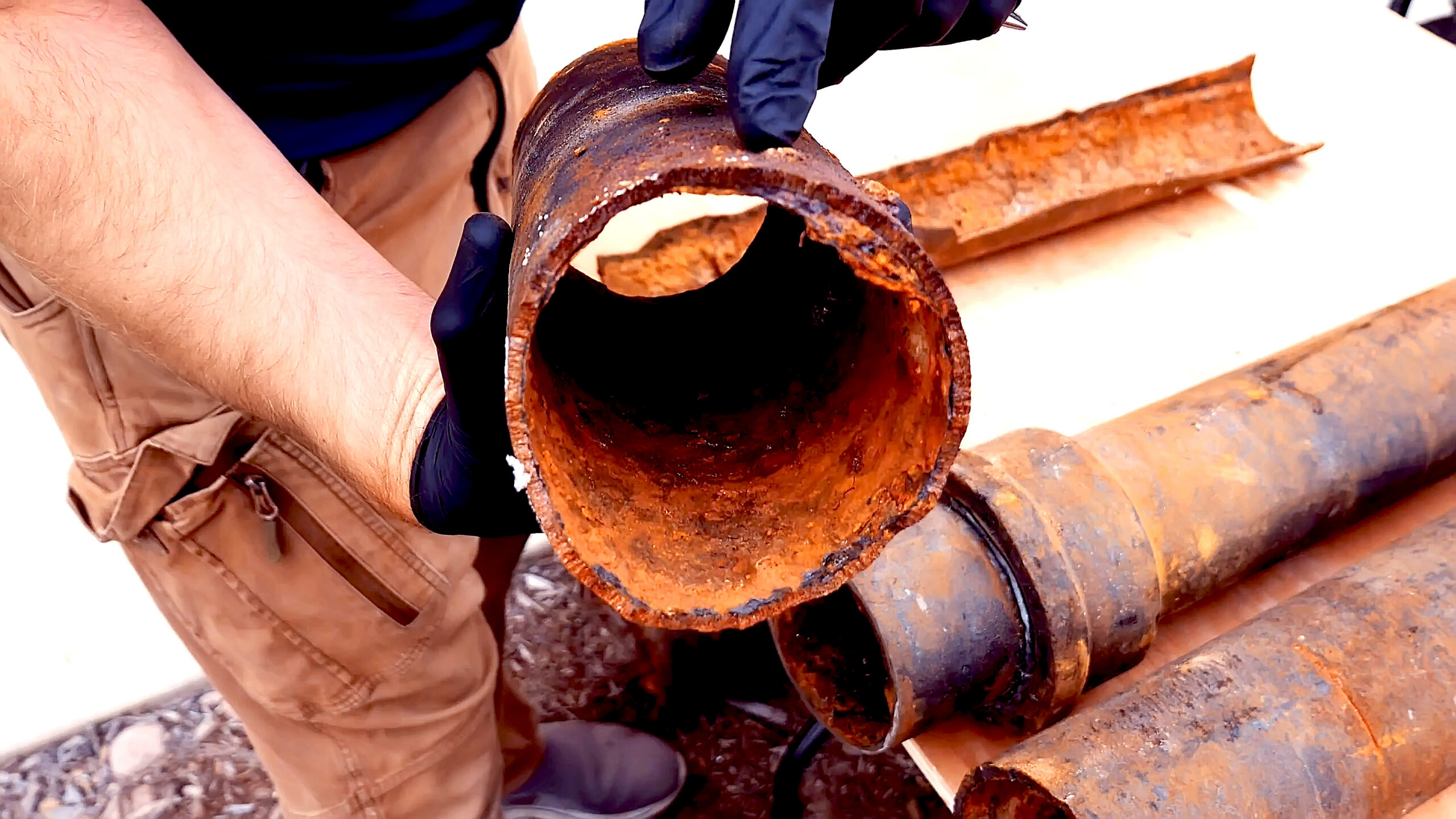
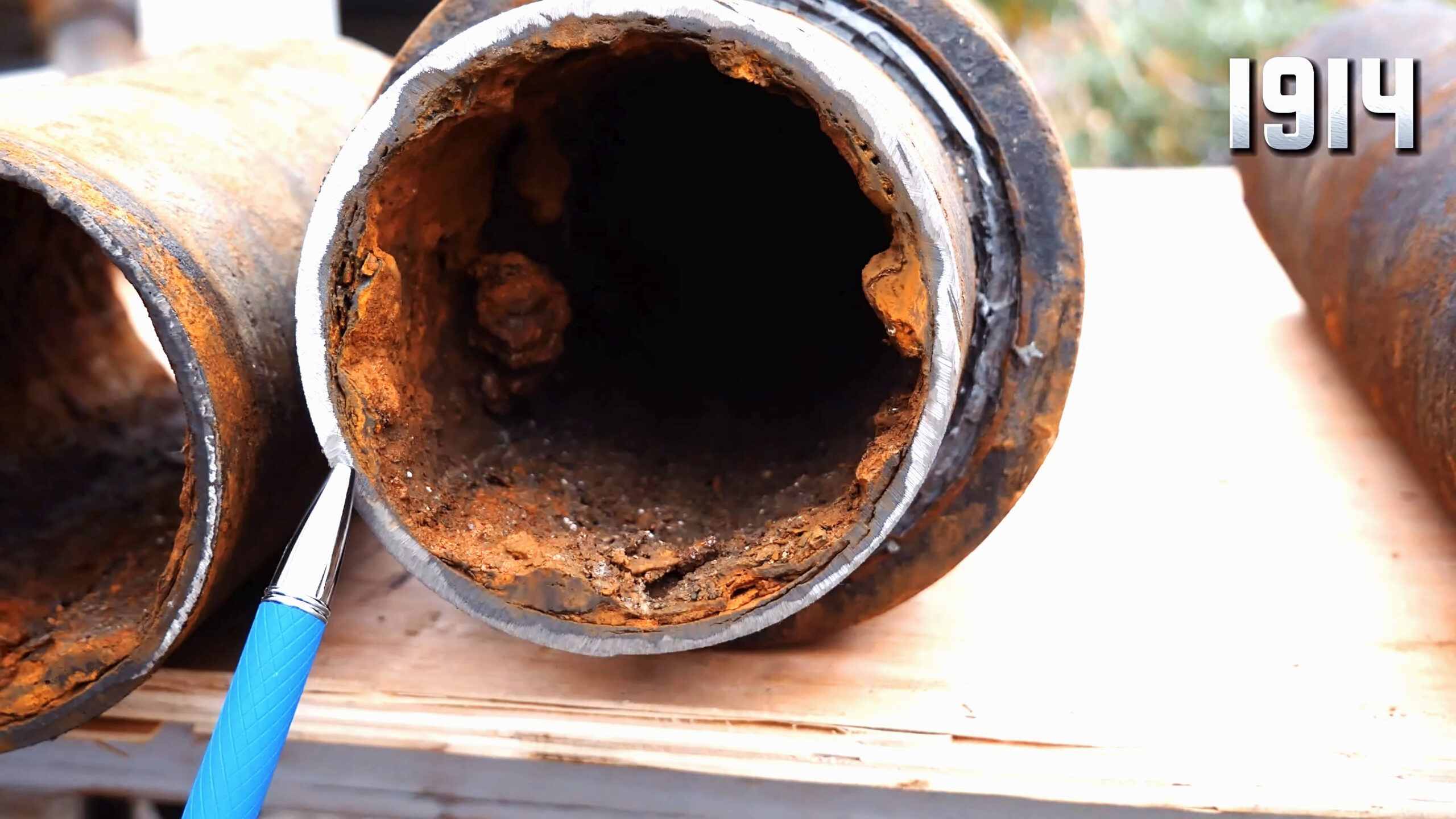
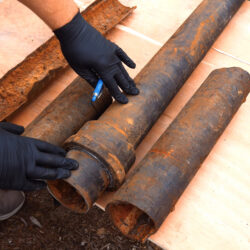
People who own older homes in San Diego usually assume that the oldest pipes are the ones most likely to fail. But during a recent sewer inspection, the team at Almco Plumbing found something unexpected under one house. A 110-year-old cast iron pipe from 1914 was actually in much better condition than a section that had been replaced during a remodel back in the 1960s.
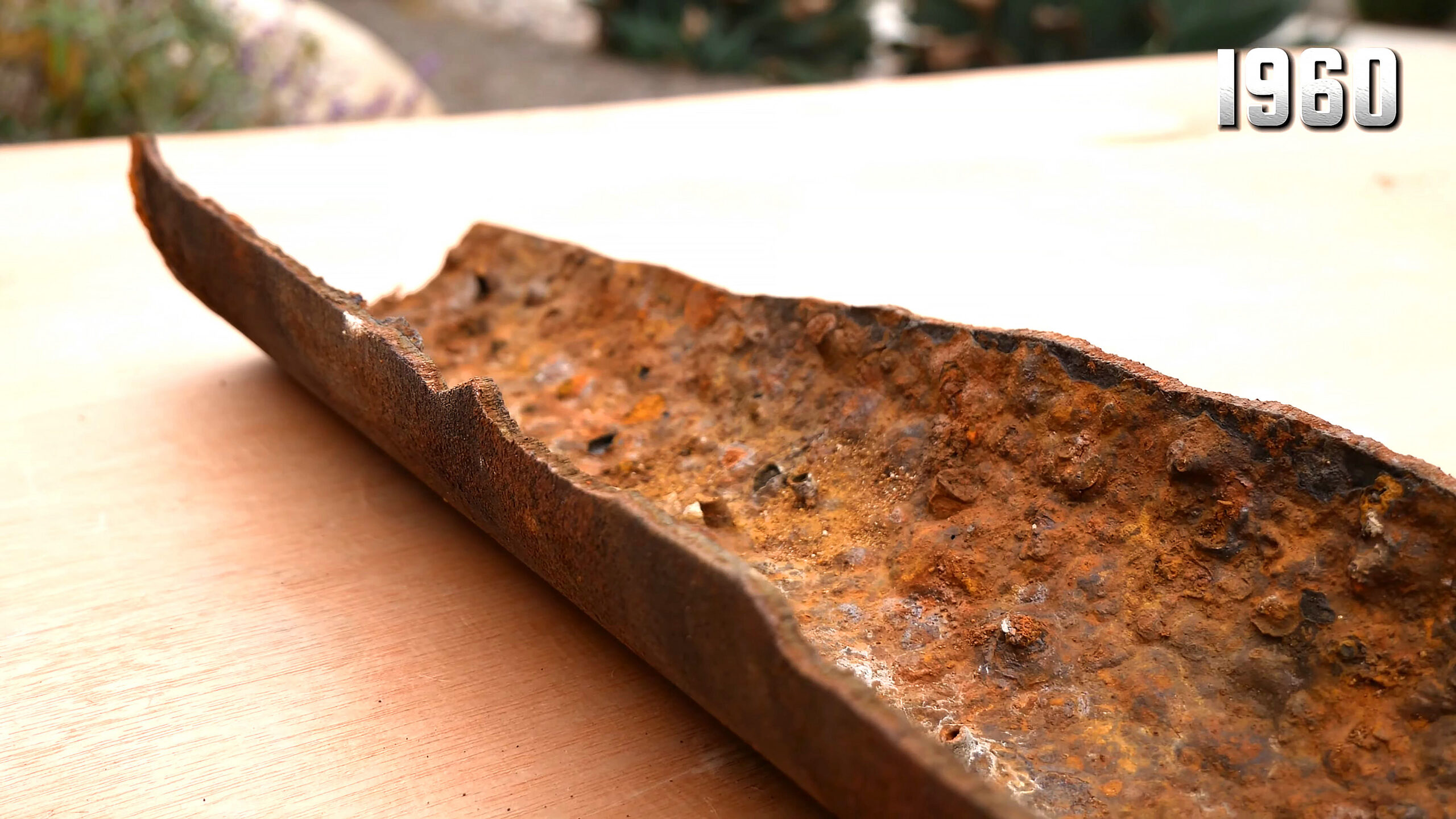
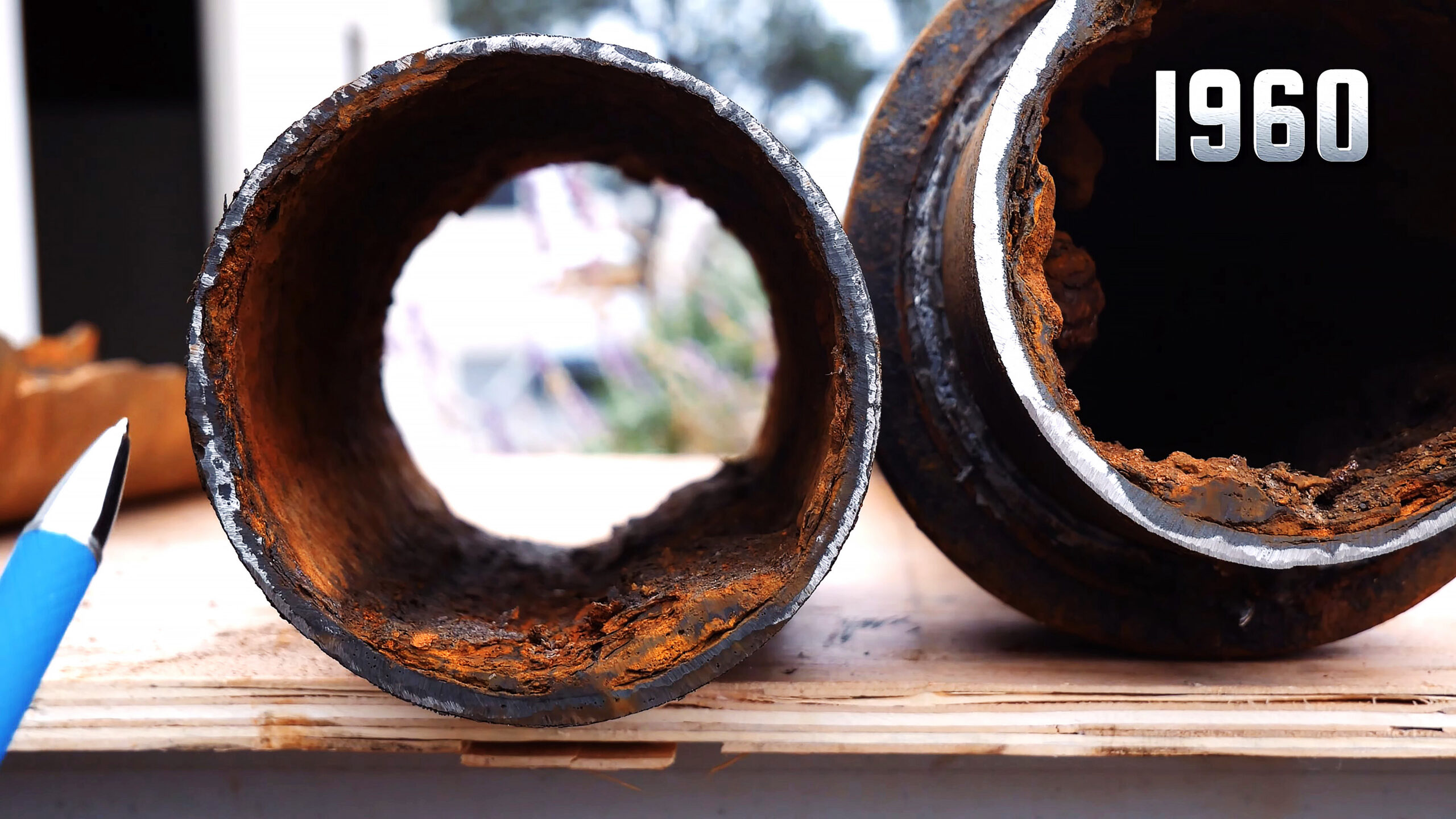
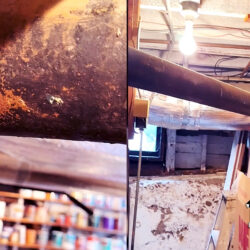
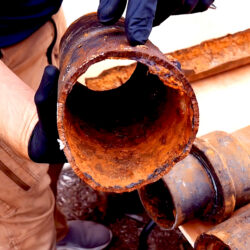
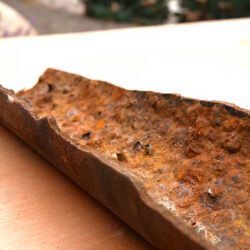
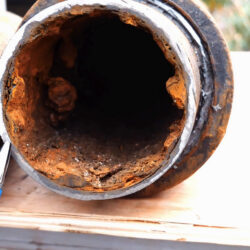
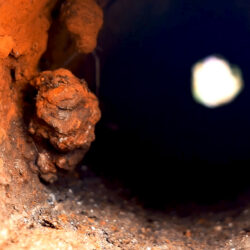
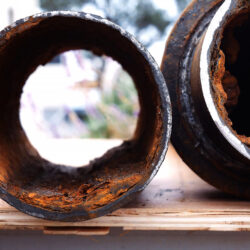
The homeowner first called us because they were tired of dealing with constant drainage problems, like sinks that wouldn’t drain and the main line clogging up over and over again. When our team arrived, the core problem was immediately obvious: the 1960s replacement section had leaks. Because the pipes were exposed in the crawlspace where people could walk underneath, you could spot the failure clearly with the naked eye without needing any equipment. While that mid-century section had suffered severe structural decay, internal rust scaling, and wall thinning, the century-old 1914 piping surprisingly retained a remarkably solid foundation. Rather than recommending a destructive, full-scale property excavation, our crew mapped out a targeted plan to replace the failing section and restore normal functions of the sewer system.
Old vs. Older Cast Iron: What Caused the Unexpected Difference?
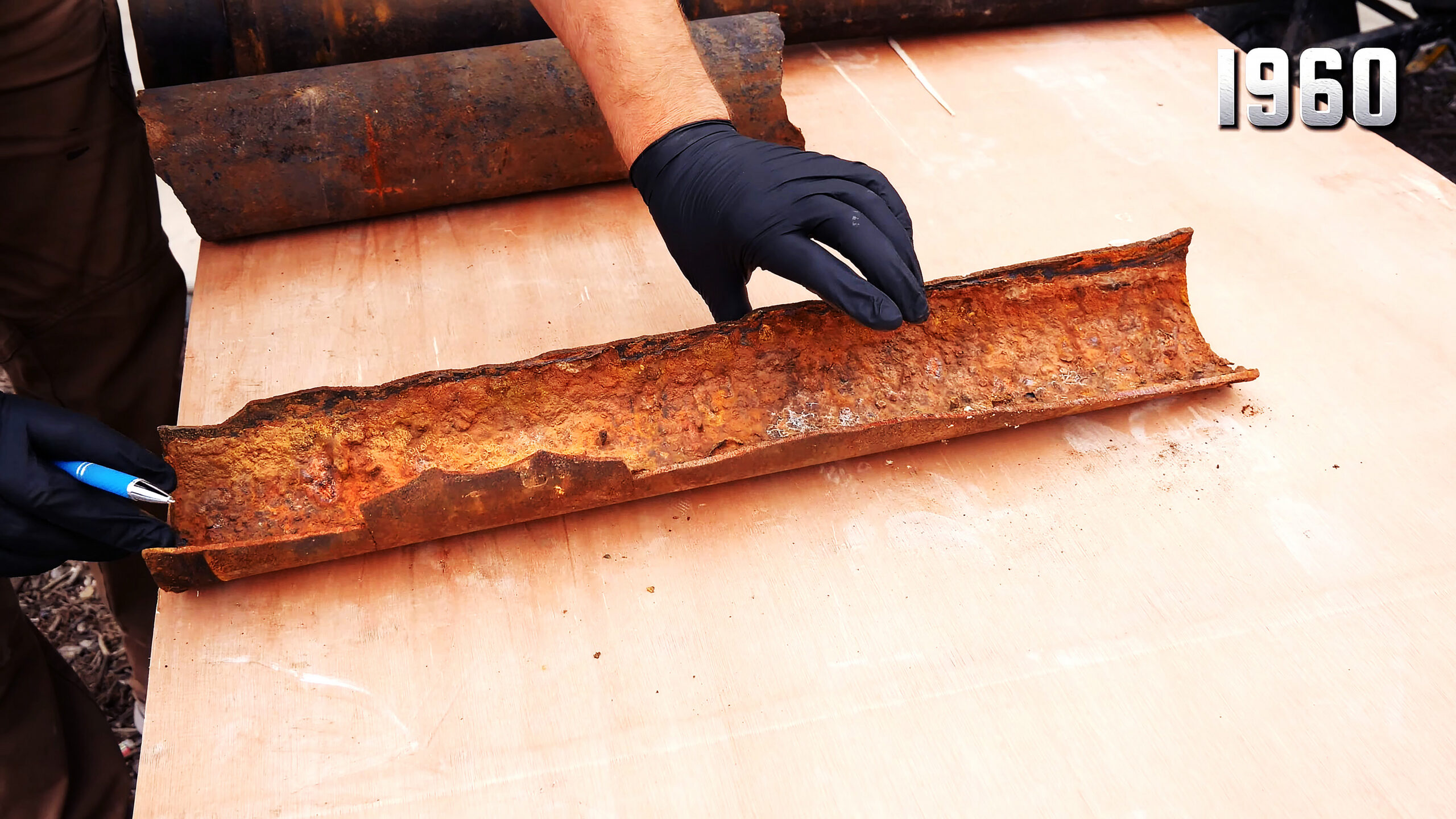
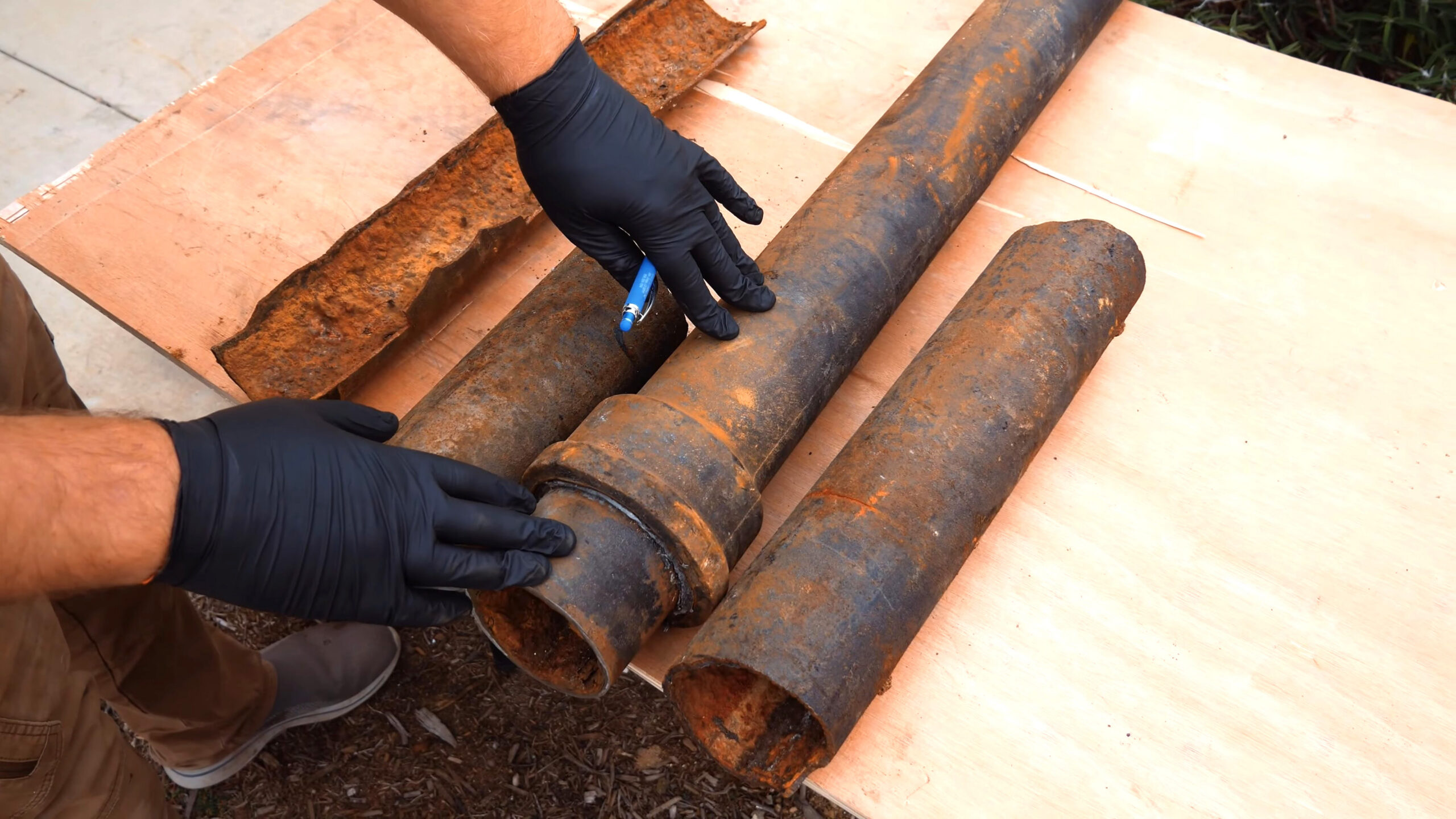
To understand why an old cast iron pipe installed in 1914 outlasted a system put in decades later, we have to look closely at historical manufacturing shifts, metal casting weights, and material thickness:
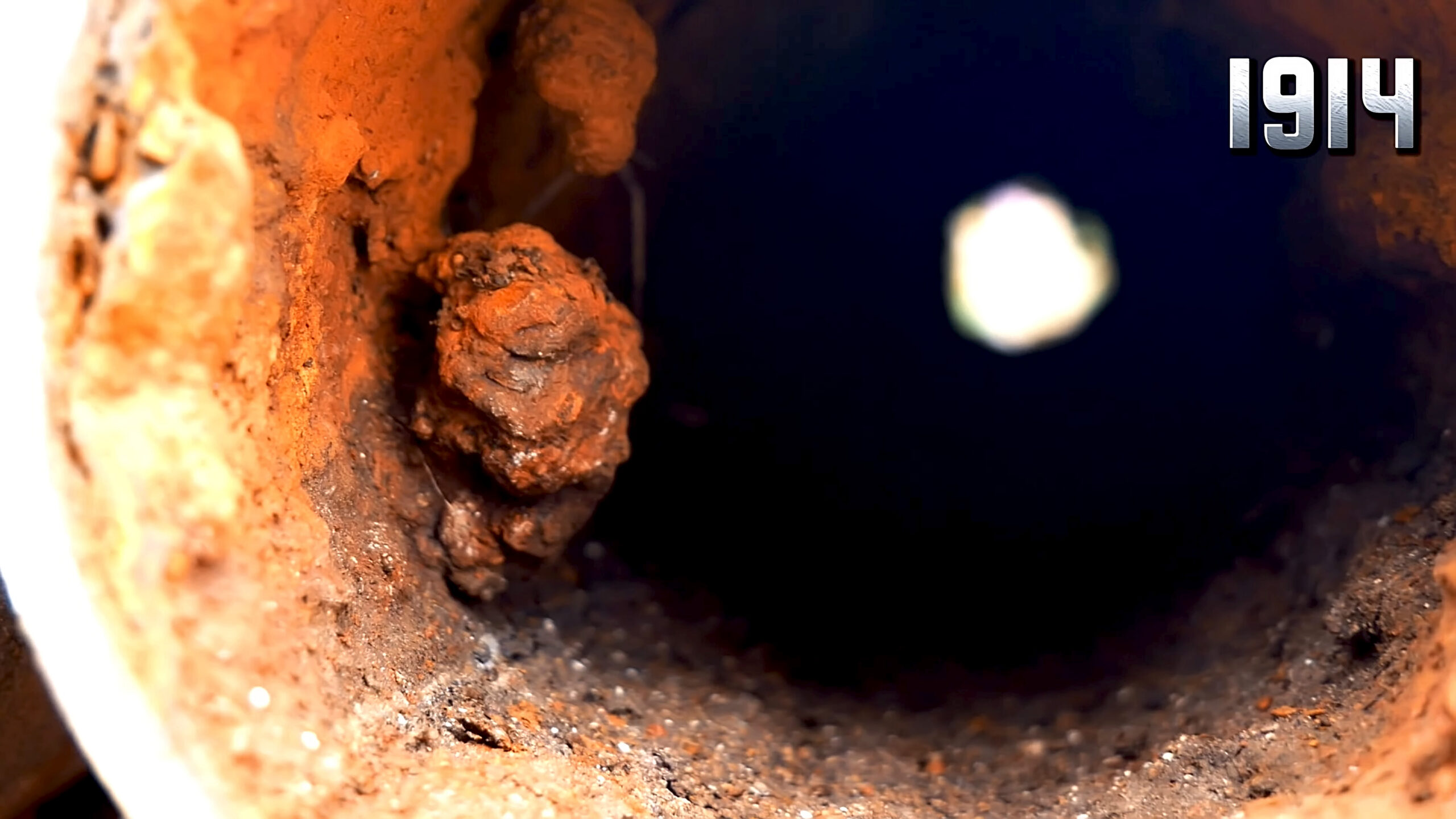
- The 1914 Original Cast Iron (110 Years Old): At the beginning of the 20th century, plumbing infrastructure was manufactured with a heavy-duty approach. These pipes were poured with significantly thicker, denser metal walls designed to withstand decades of heavy shifting soil and continuous wastewater exposure. Even after more than a century of service, the structural core remained robust enough to be thoroughly descaled and prepared for a seamless structural lining.
- The 1960s Replacement Cast Iron (60 Years Old): As manufacturing practices evolved into the mid-20th century, production standards shifted toward lighter-weight, thinner-walled castings often referred to as “service weight” pipe. Paired with decades of cumulative exposure to modern chemical cleaners and constant moisture, this thinner metal suffered accelerated internal corrosion, deep pitting, and structural cracking long before its older counterpart.
Solution from Almco Plumbing
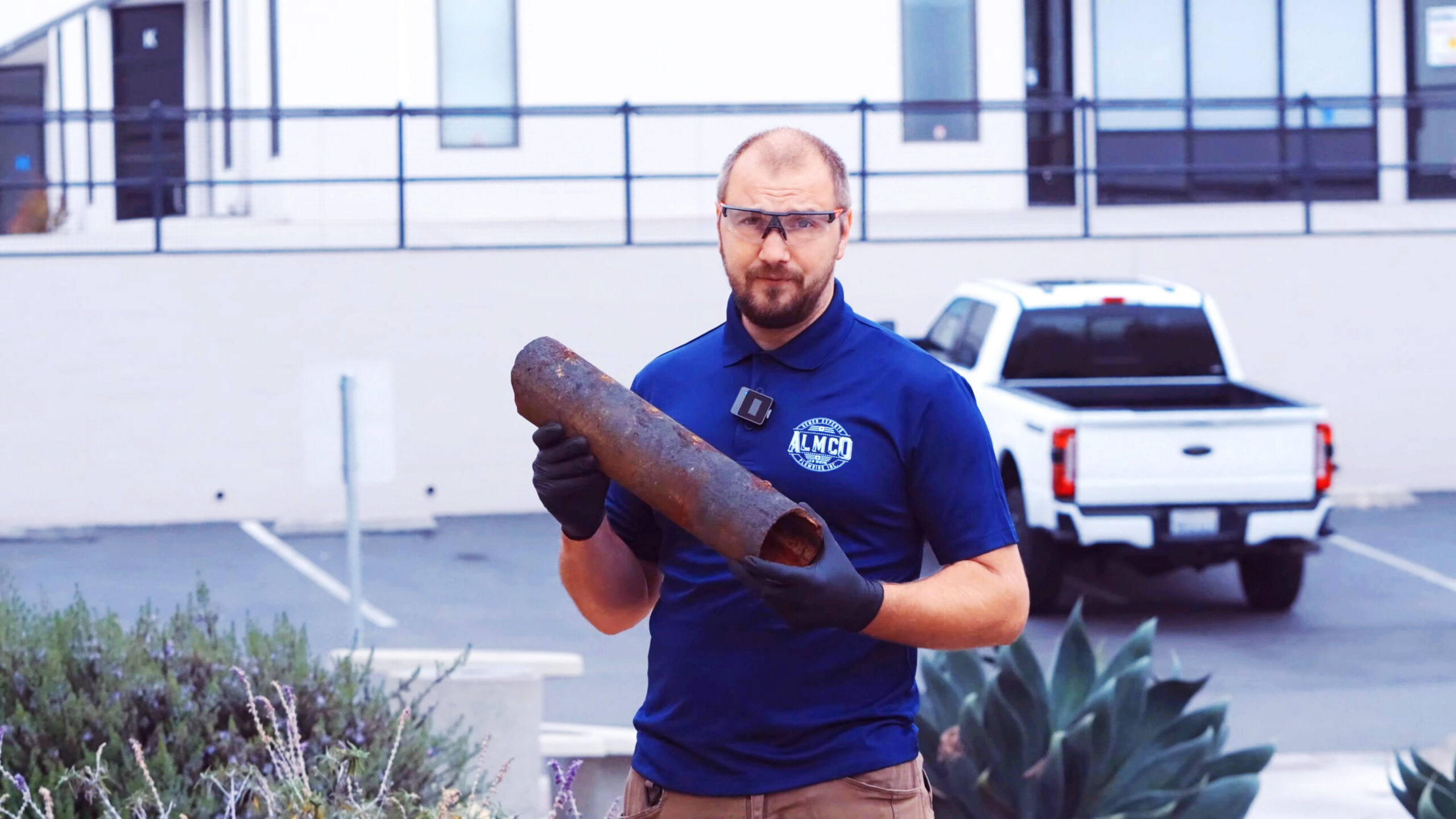
Restoring a drainage system with mixed-age piping requires careful engineering and the right judgment call. Because the 1960s replacement pipe had suffered extensive, irreparable structural failure, Almco’s CEO determined that those ruined sections needed to be physically replaced. Meanwhile, the ultra-old cast iron pipe from 1914 was structurally sound enough to be preserved and lined from within using a specialized mechanical approach. Here is how our team executed this comprehensive cast iron sewer pipe repair project:
- Initial Visual Assessment: We initiated the project by inspecting the exposed piping in the crawlspace, spotting the active leaks with the naked eye and mapping out the layout to determine exactly which sections needed replacement.
- Targeted Section Replacement: Following the CEO’s expert guidance, our crew excavated and replaced the severely compromised 1960s pipe sections that had lost their structural integrity and couldn’t be safely lined.
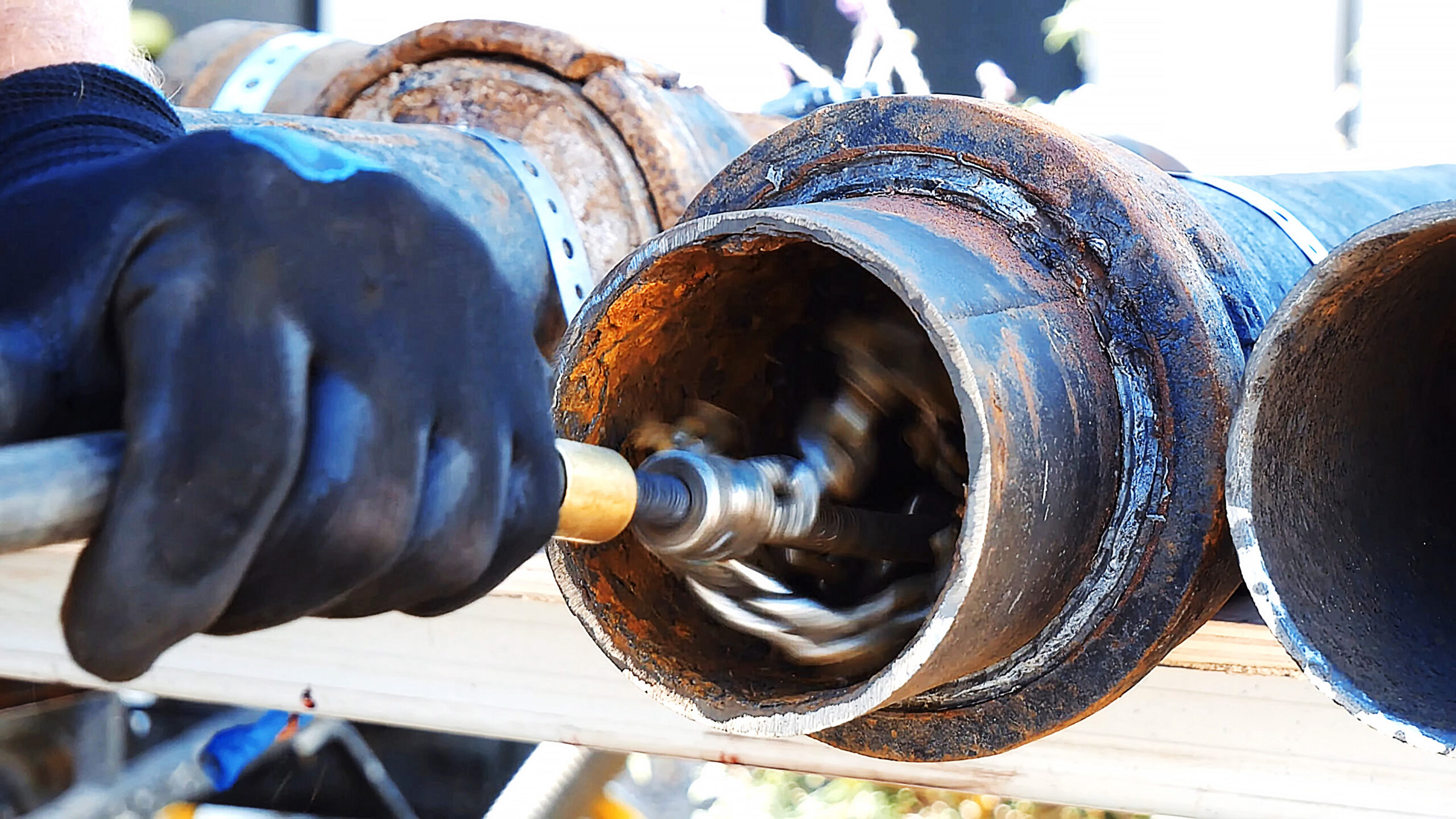
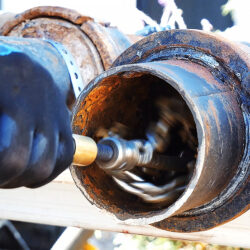
- Specialized Mechanical Descaling: For the historic, heavy-wall 1914 cast iron line that remained, our technicians used precision carbide chain descalers on flexible shaft machines to safely scrub away decades of hard mineral deposits—avoiding aggressive hydro-jetting that could damage fragile walls.
- Trenchless Pipe Rehabilitation: Once the remaining host pipes were fully cleared, cleaned, and dried, we introduced an advanced epoxy pipe lining application to seal all interior walls and joints of the historic line.
- Final Quality Check: We concluded the project by verifying a seamless, 100% smooth flow path connecting the newly replaced sections and the restored 1914 line.
Why Restore Old Cast Iron Drains With Epoxy Lining?
Choosing traditional trench excavation to unearth and replace underground cast iron lines often triggers a domino effect of expensive secondary repairs, including replacing broken driveways, cutting concrete slabs, and rebuilding custom tile work. Opting for trenchless pipe repair allows Almco Plumbing to construct a heavy-duty, seamless “pipe-within-a-pipe.” This structural upgrade permanently neutralizes internal corrosion, eliminates root intrusion points, and complies with stringent NASSCO structural standards—effectively resetting your drainage system’s operational lifespan for decades to come.
Conclusion
When it comes to aging sewer systems, chronology alone doesn’t tell the whole story. As this San Diego plumbing project proved, even a century-old old cast iron pipe can outlast younger, thinner materials when handled with the right expertise and modern restoration techniques. If your property is showing warning signs of slow drains or recurring line backups, professional pipe restoration from Almco Plumbing delivers a permanent, cost-effective fix that safeguards your home, protects your yard, and preserves your peace of mind.